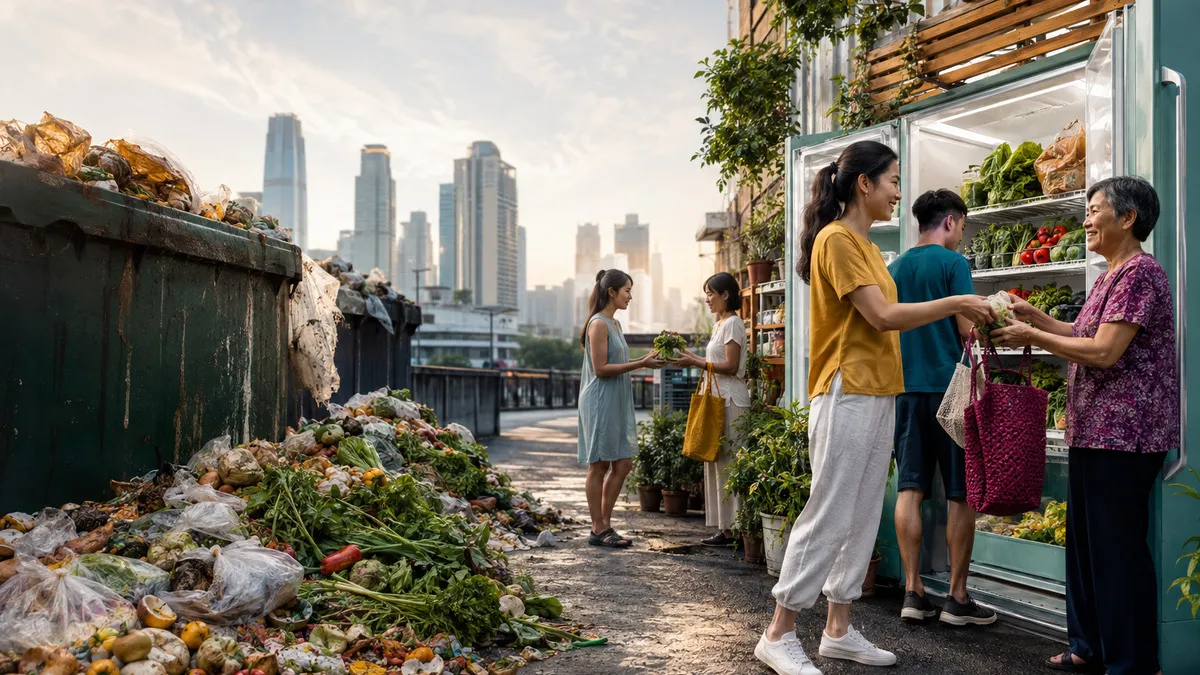
Some people are worrying about where their next meal will come from, while elsewhere large quantities of food go straight from fridges, restaurants and supermarkets into the bin. The United Nations Environment Programme estimates that in 2022, retail, food service and households together generated 1.05 billion tonnes of food waste worldwide — the equivalent of 132 kilograms per person, and close to one fifth of all food made available to consumers. Households alone waste more than a billion meals’ worth of food every day.
This is not simply a moral question about “not valuing food”. Getting food from the field to the table requires land, water, fertiliser, energy, labour, processing, packaging and cold chains. Throwing food away means throwing away all the resources invested beforehand as well; once it reaches landfill, it can also generate methane.
Waste is rarely deliberate
Households may buy too much because of promotions, may not understand the difference between a “best before” date and a “use by” date, or may pack the fridge so full that they forget what is inside. Restaurants over-prepare in order to keep displays looking abundant, while retailers discard still-edible products because of appearance standards, inventory levels and return arrangements.
If the problem is reduced to “everyone should finish their food”, we lose sight of how the supply system itself creates waste. Genuinely saving food means working on purchasing forecasts, portion design, storage, discounts for items near their date, surplus food matching, donation rules, and the sorting and recovery of food scraps — all together.
The United Nations International Day of Zero Waste in 2026 again puts the spotlight on food waste. The latest official data still show that around 60 per cent of consumer-level food waste comes from households, with food service accounting for 28 per cent and retail for 12 per cent. Individual action therefore matters, but businesses and cities carry responsibilities that no one else can take on for them.
Sharing resources can begin with a single unfinished meal
Households can start with simple changes: check what you already have before shopping, keep ingredients close to their date where you can see them, order according to your appetite, be willing to take leftovers home, and accept fruit and vegetables that do not look perfect. Communities can set up food sharing cabinets, surplus food platforms and refrigerated logistics; companies can treat their “write-off rate” as an operational indicator rather than an unavoidable cost.
Food safety, of course, cannot be sacrificed. Sharing and donation must come with temperature control, clear accountability and clear rules — the cost of dealing with waste should not be passed on to disadvantaged groups.
Saving food is not about asking everyone to eat until they are overfull. It is about making sure food has somewhere better to go before it becomes rubbish.
Schools and families can also pass this on. Involving children in shopping, storing and cooking, so they understand where a portion of food comes from, is more useful than asking them to recite environmental slogans. When everyday habits become visible, values are handed down from one generation to the next.
The sharing of resources that the Vision Association speaks of does not have to begin with a large-scale programme. Sometimes it simply means getting something that would have been thrown away into the hands of someone who truly needs it. When that is built into how things are done, what is saved is not just one meal, but a whole chain of land, water and carbon.
References
-
United Nations Environment Programme (UNEP), Food Waste Index Report 2024.
-
UNEP, official materials for the International Day of Zero Waste 2026.