
Conscious Living: What to Support
Choosing a values-driven cycle: letting resources flow toward the future you believe in
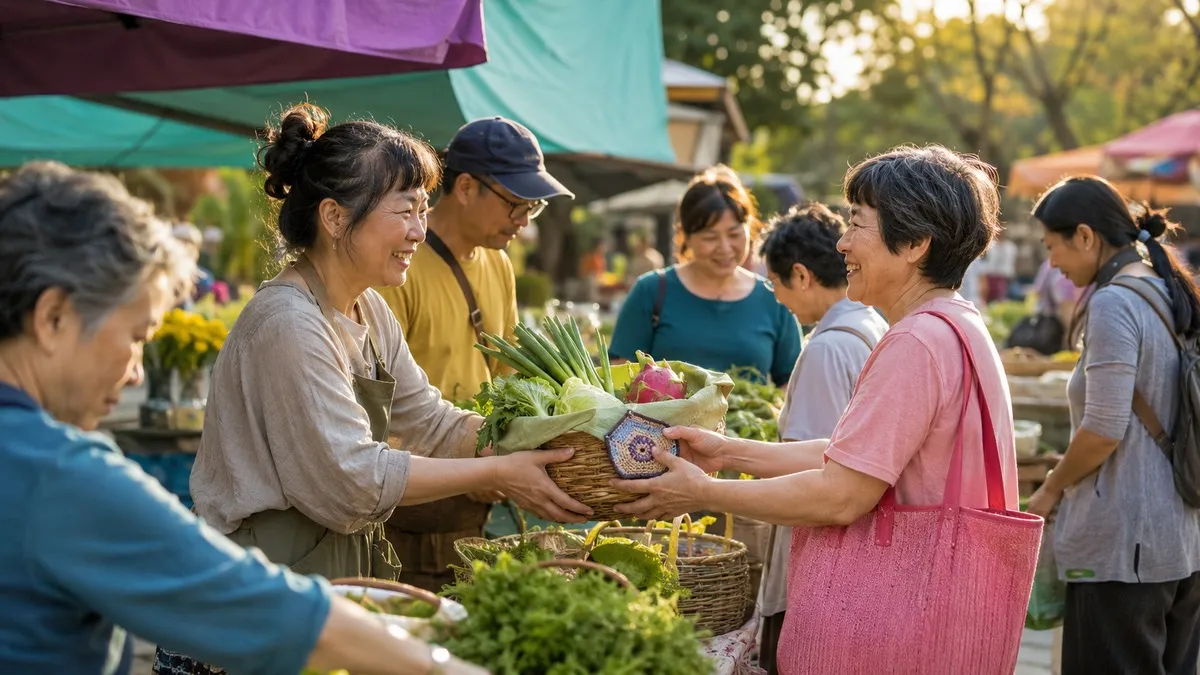
Every payment may look like nothing more than a completed transaction, but it also answers a question: what kinds of products, businesses and ways of living do we want to see continue? Price matters, of course, but if we only look for the cheapest option in front of us, the hidden costs may fall somewhere out of sight: underpaid labour, opaque sourcing, a sacrificed environment, or products that are quickly thrown away.
“What to support” does not mean everyone has to buy expensive goods, and a public-interest or sustainability label does not automatically mean something is trustworthy. When values cannot be explained or examined, all that easily remains is the packaging. An organisation worth supporting should be willing to answer: where do the resources come from? How are they used? What do partners receive? What impacts do the products or services create? And what has not been done well?
Transparency does not mean perfection; it means being willing to take responsibility for one’s choices. A local shop may not have a polished sustainability report, yet it has bought from nearby smallholders for years, cut unnecessary packaging and treated its staff well. A social organisation may be small, yet able to account clearly for how each donation becomes a service. Values are not a sentence written on the wall, but the decisions still made when costs and interests come into conflict.
Support can take many forms. Buying a product, using a service, joining an event, donating, volunteering, or sharing reliable information with more people are all ways of keeping resources moving. The amount need not be large; what matters is that it is consistent and clear. It is not hard to give once out of a moment of feeling, but only when we are willing to follow the results over time and ask questions does support gradually become a relationship.
We also have to acknowledge that consumer choice is not all-powerful. When the market lacks transparent information, when friendlier products cost too much, or when public systems have not established fair rules, it is hard for individuals to change structures through shopping alone. Supporting a values-driven cycle therefore also means asking companies to disclose, pressing governments to improve systems, and making responsible options something other than a privilege for a few.
For the Vision Association, sharing resources cannot simply mean handing over what is left over. We want to place valuable capabilities, time, channels and trust where they can bring about the next step of change. Those who receive support are not only passive recipients of help; they can gradually grow their own capacity, and then pass resources on to the next person. That is what makes it a cycle.
In an age of too much information and too many slogans, it is worth slowing down before choosing. Do not only ask “what does it say”; look at “what has it done over time”. Do not be moved only by a single story; look at whether resources really reach the people who need them.
We cannot buy a perfect world with one purchase, but we can decide to stop handing our resources to directions we do not believe in. When every act of support is made consciously, money, time and expertise are not only something given away — they are a vote for the future.