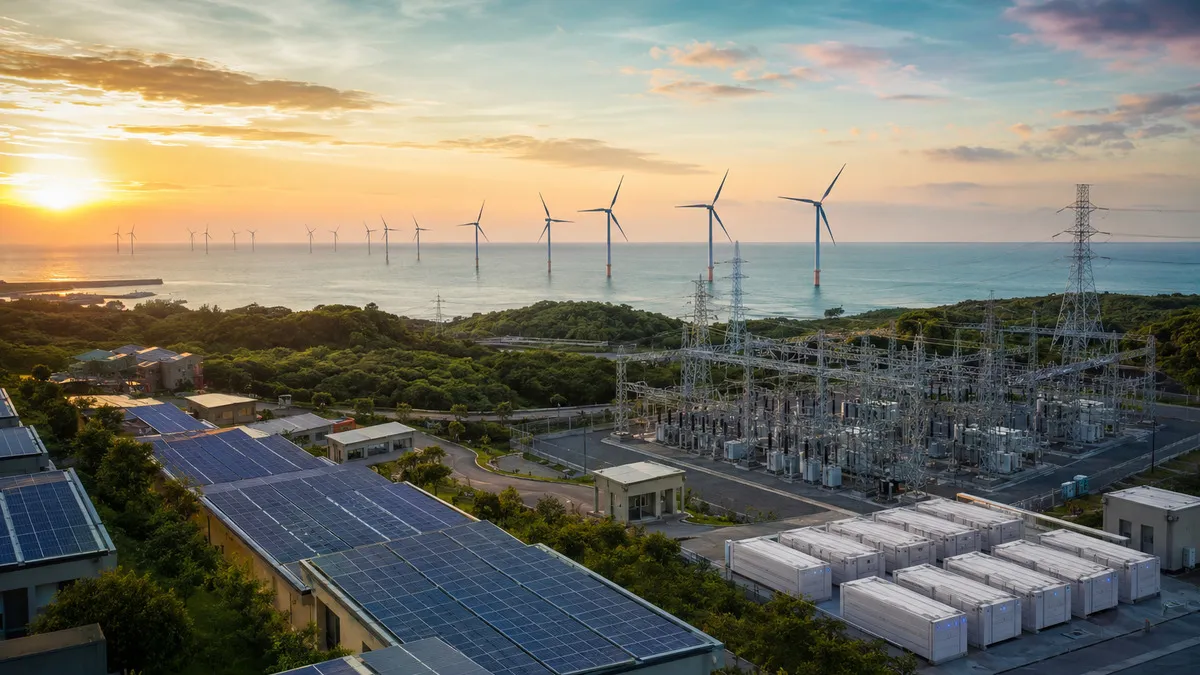
Renewable energy worldwide is growing at a pace that was hard to imagine in the past. The International Energy Agency estimates that between 2025 and 2030, global renewable power capacity will increase by nearly 4,600 GW — twice the amount added in the previous five years. Solar photovoltaics account for close to 80 percent of that new capacity. The annual increase in global solar generation in 2025 also set a record.
In theory, more solar and wind should make the energy transition easier. In reality, many countries are still dealing with anxiety about electricity prices, supply reliability, the grid and energy security all at once.
The reason is simple: building generating equipment only gets half the job done.
The power transition is not just swapping one kind of electricity for another
After the sun goes down, solar panels stop generating; wind also changes with the weather. As variable renewables take up a larger share, the grid has to become more flexible — it needs storage, inter-regional transmission, demand management, dispatchable power and more accurate forecasting.
If grid upgrades fall behind, even completed green energy projects may sit waiting because they cannot connect. And if peak demand and peak generation occur at different times, there can be too much power in some hours and not enough in others.
At the same time, AI data centres, electric vehicles, air conditioning and the electrification of manufacturing are all pushing demand up. The International Energy Agency’s 2026 electricity report projects that solar generation will overtake both wind and nuclear in 2026, but with demand growing even faster, the real question becomes whether new clean power can keep up with new consumption.
Green energy is not free of costs, and fossil fuels are not cheap without costs either
Energy debates are often reduced to being for or against one particular way of generating electricity. But every choice carries costs: land, minerals, transmission lines, environmental impacts, air pollution, carbon emissions, waste and safety risks. What a mature society needs to do is not pretend that one energy source is perfect, but lay the costs out in the open and settle on a mix it can bear and can correct.
This also means the energy transition cannot be measured by installed capacity alone. Governments need to invest in grids and storage at the same time, improve permitting processes, and give local communities a genuine role — rather than starting the conversation only when construction crews arrive. Companies cannot simply sign a green power contract; they also need to cut unnecessary consumption, shift production schedules and improve equipment efficiency.
Household choices are about more than switching off one lamp
Saving electricity as an individual certainly helps, but the whole responsibility should not be reduced to “remember to turn off the lights.” What matters more is choosing efficient appliances, improving insulation, understanding electricity pricing and peak versus off-peak hours, supporting sound energy policy, and asking governments and companies to disclose full information.
What we really need is not just more green electricity, but a power system that is cleaner, more reliable and fairer.
The energy transition has no single button that turns things from dirty to clean at one press. It is more like changing the engine of an aircraft that is still in flight: you cannot stop, and you cannot afford to wait. That is exactly what makes it difficult — and why we cannot avoid it.
References
-
International Energy Agency (IEA), Renewables 2025.
-
International Energy Agency (IEA), Electricity 2026.