When we talk about climate change, the topic we hear most often is cutting carbon. Using fewer fossil fuels, improving energy efficiency, developing renewables — all of these matter. But when heatwaves, torrential rain, drought and typhoons are already happening, talking only about how to avoid future warming does not protect the people standing in harm’s way today.
This is why “climate adaptation” matters.
Mitigation means trying to stop the problem from getting worse; adaptation means facing changes that can no longer be avoided and reducing the loss of lives, health and property. The two are not an either-or choice. Adaptation without emissions cuts means disasters will eventually exceed what we can bear; emissions cuts without adaptation means the impacts already upon us will still strike the most vulnerable.
Climate risk has never been evenly distributed
In the same heatwave, someone with air conditioning, an insulated home and flexible working hours lives in a different world from someone in a rooftop addition who has to work outdoors. In the same downpour, those with insurance, savings and somewhere to move to temporarily recover far faster than older people living alone, low-income families and small businesses.
The United Nations Environment Programme’s 2025 Adaptation Gap Report estimates that developing countries will need roughly US$310 billion to US$365 billion per year for adaptation by 2035; yet international public adaptation finance in 2023 came to only US$26 billion — lower than the year before. The world is not unaware of the risks; the resources are still not flowing to where they are needed most.
This also shows that climate adaptation cannot rest on individuals simply “being careful.” Urban drainage, health systems, grid resilience, shelters, ageing buildings and early warning systems are not things any single household can put in place alone.
Households can start with a risk checklist
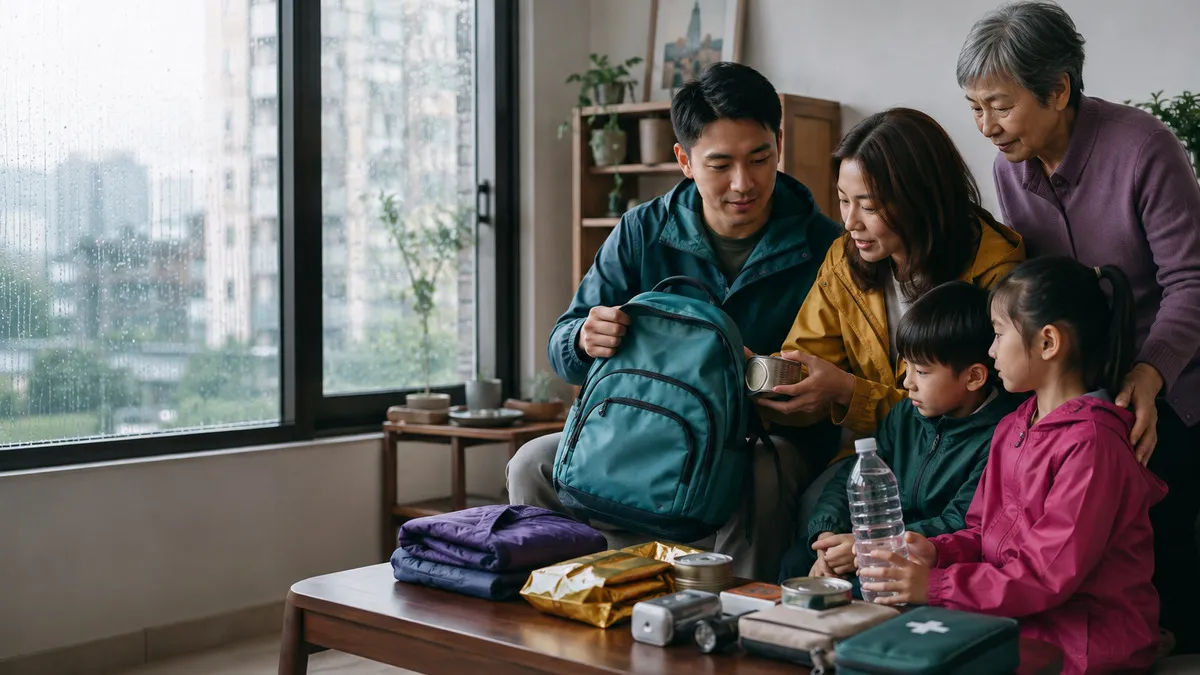
Adaptation does not have to begin with large-scale engineering. Every household can start by asking a few very practical questions: Are there older people, young children or people with chronic illness at home? What happens to medical equipment that needs electricity during a power outage? Is the home located in an area at risk of flooding, landslides or extreme heat? Are important documents, medication, drinking water and emergency contact information ready?
These steps may look ordinary, but they determine whether a household can look after itself when disaster comes — and whether it has the capacity to help others.
Communities can go a step further by identifying older residents living alone, setting up heat check-in and disaster contact networks, and confirming which places can serve as temporary cooling or charging spaces. Beyond inventorying their carbon emissions, businesses should also build extreme weather into business continuity plans: What if a supplier is disrupted? Do employees working in high heat have enough rest and protection? How much risk can data centres, warehousing and logistics withstand?
Resilience is not about pushing responsibility back onto individuals
“Resilience” has become a popular word in recent years, but it should not be read to mean that governments and businesses need not change, and that people simply have to endure more. Real resilience means institutions see vulnerable people first, and resources are in place before disaster strikes.
The Vision Association believes that sharing resources is not about handing out supplies after a disaster, but about building information, capability and connections with one another in ordinary times. When one household is prepared, it can look after the household next door; when a community is connected, it does not have to start from zero every time.
In the end, climate adaptation is not only an engineering question. It is also a question of whether a society is willing to care for its own.
References
-
United Nations Environment Programme (UNEP), Adaptation Gap Report 2025, 29 October 2025.
-
World Meteorological Organization (WMO), State of the Global Climate 2025.