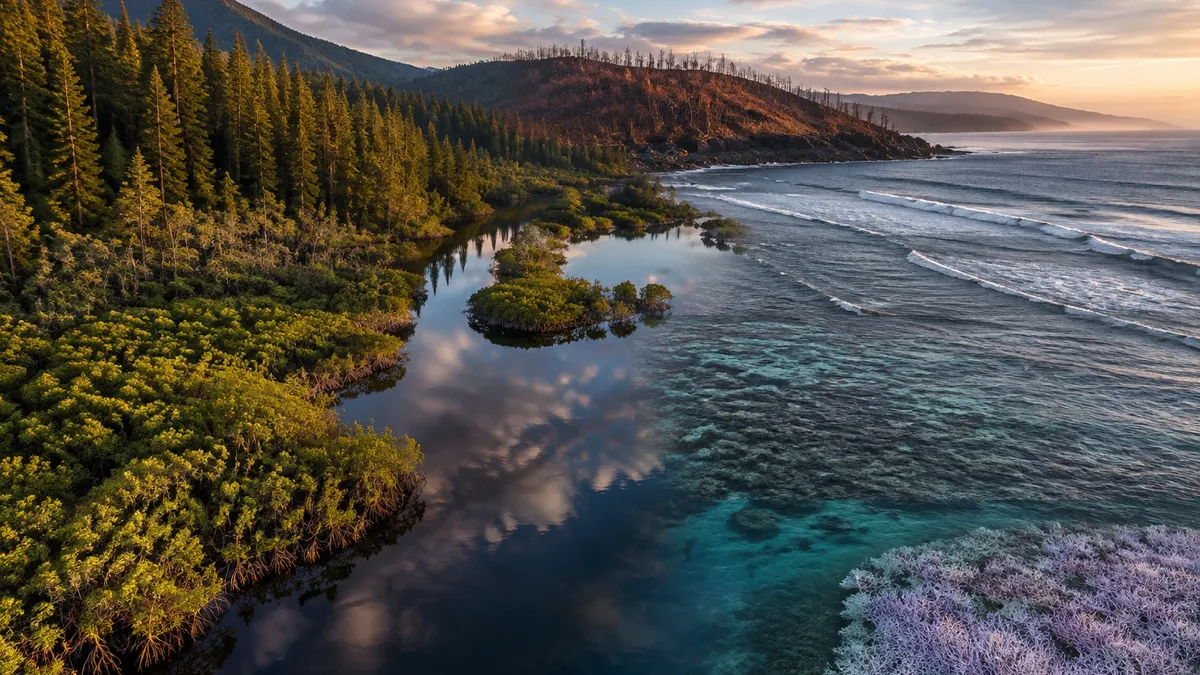
Whenever net zero comes up, planting trees is almost always the easiest answer to grasp. Trees absorb carbon dioxide, and the ocean can absorb large amounts of heat and carbon as well, which is why we often call forests and oceans “carbon sinks.” But a carbon sink is not a warehouse with room forever, and still less a free cleanup crew that allows humanity to keep on emitting.
The World Meteorological Organization notes that global carbon dioxide concentrations rose by 3.5 ppm between 2023 and 2024, the largest annual increase since modern measurements began in 1957. Alongside fossil fuel emissions and an increase in wildfires, a weakening capacity of terrestrial ecosystems and the ocean to absorb carbon may be another contributing factor. As the climate warms and droughts and wildfires become more frequent, the very natural systems that absorb carbon for us may also be harmed.
Carbon Is Always Moving Around the Earth
Plants use photosynthesis to convert carbon dioxide from the atmosphere into biomass; soils store organic carbon formed from roots, fallen leaves and microorganisms; and the ocean absorbs carbon through dissolution and biological processes. Together these processes make up the carbon cycle, and they allow part of what humans emit to leave the atmosphere for a time.
But if forests are felled or burned, the carbon they store is released again; when soils suffer erosion and over-cultivation, they too lose organic carbon; and as the ocean absorbs more carbon dioxide, acidification may worsen, affecting corals and shellfish. What carbon sinks offer is time, not exemption.
This is also why “how many trees were planted” cannot be equated directly with permanent carbon reduction. Are the tree species suited to the location? What kind of ecosystem was the land to begin with? Who is responsible for looking after it? If the trees disappear a few years later because of fire, pests and diseases, or development, what happens to the carbon already counted? These questions matter more than the photographs taken on the day of a tree-planting event.
Protecting Existing Ecosystems Is Often More Reliable Than Replanting Afterwards
The ecological relationships a mature forest has built up over many years cannot be replaced overnight by planting a batch of saplings. Wetlands, peatlands, mangroves and seagrass beds also store carbon while controlling floods, providing nurseries for young species and protecting coastlines. The real value of nature-based solutions cannot be reduced to a number of tonnes of carbon.
When governments and companies plan around carbon sinks, they should first avoid damaging existing ecosystems before turning to restoration and increased absorption. They must also respect the land rights of local communities and Indigenous peoples, and must not let the pursuit of carbon credits turn nature protection into a reason for excluding residents.
For ordinary people, protecting carbon sinks is not simply a matter of joining a tree-planting event. Supporting products that do not destroy habitats, reducing waste, paying attention to water sources and land development, and asking that restoration projects disclose their long-term results are all ways of moving nature protection from a one-off activity towards ongoing management.
Forests and oceans are not merely a backdrop to the human economy. They are part of our water, food, climate and everyday safety. Protecting carbon sinks is not just about subtracting emissions on a balance sheet; it is an acknowledgement that we still depend on a healthy Earth system that can keep functioning.
References
-
World Meteorological Organization (WMO), Greenhouse Gas Bulletin No. 21, 2025.
-
Intergovernmental Panel on Climate Change (IPCC), assessment reports on the carbon cycle and terrestrial and ocean carbon sinks.