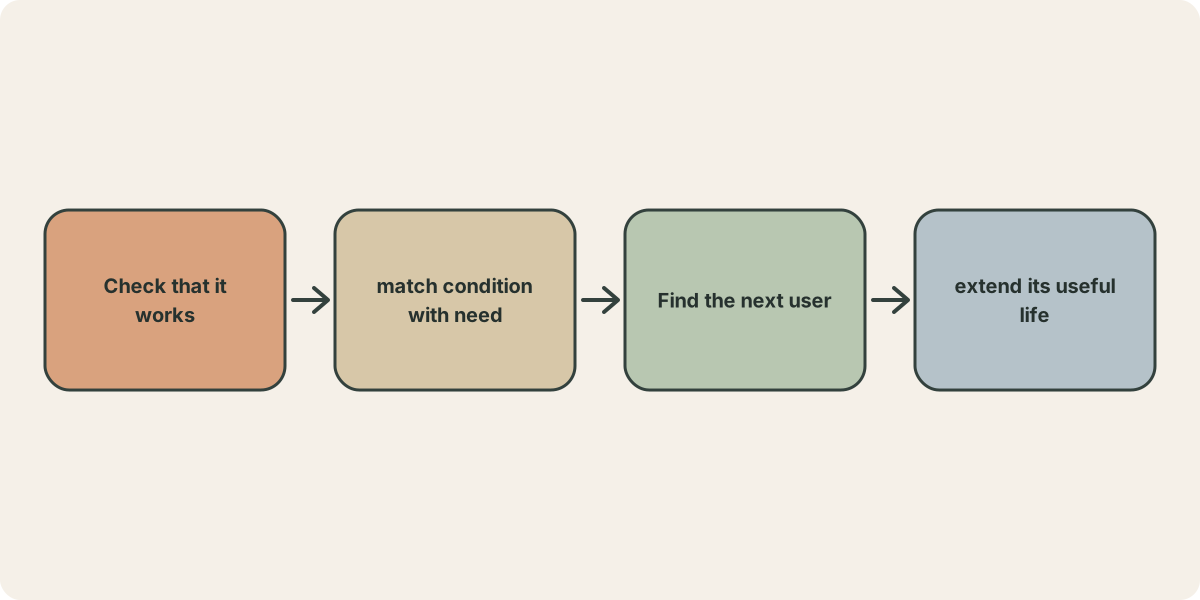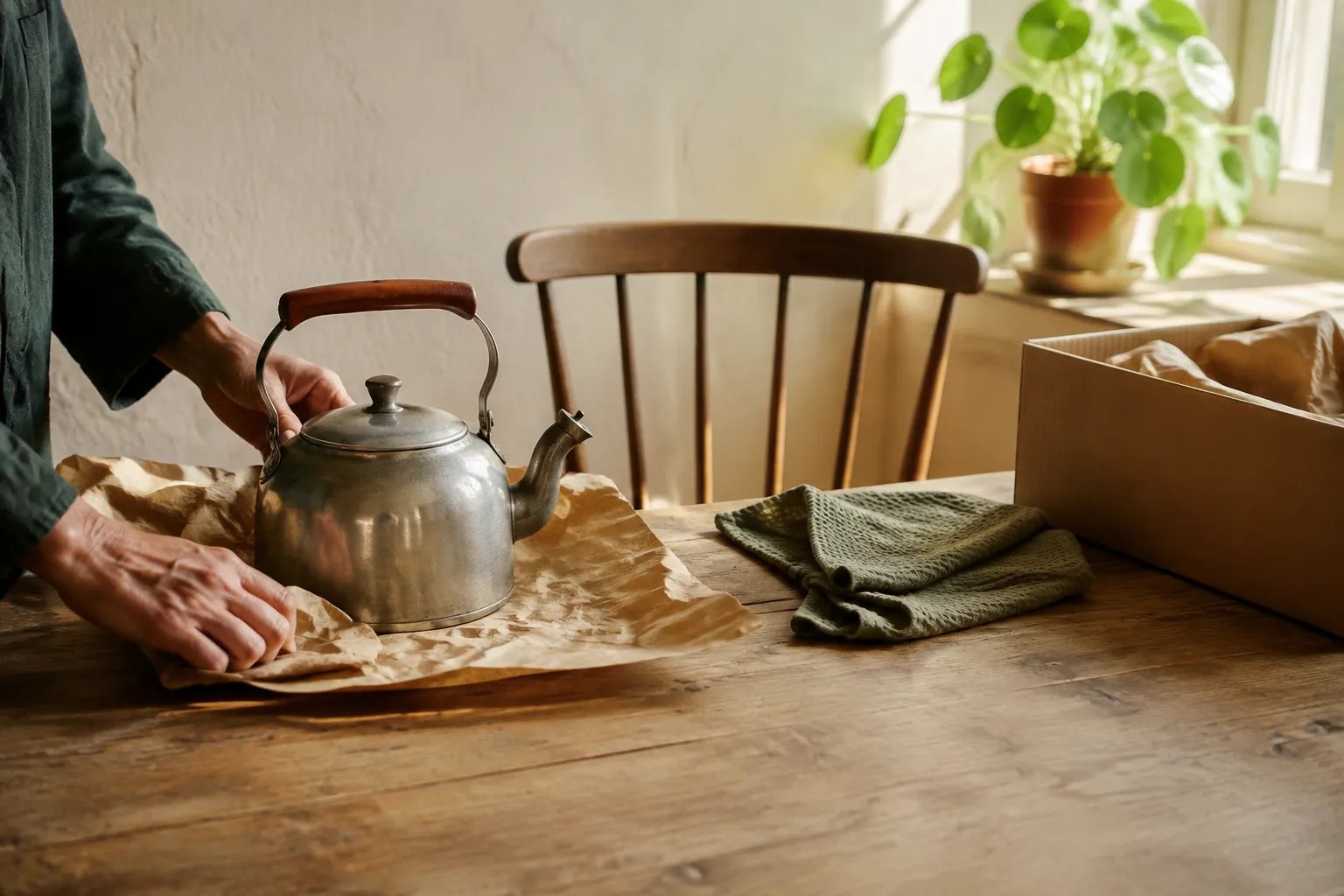
“It still works” is often why an item stays in a home for years. Yet something that is not being used neither replaces a new purchase nor helps anyone’s life. It only occupies cabinets, rooms, and the energy it takes to decide.
Records from organizing ten households listed 580 bags of items: 195 bags given away, 219 bags classified as trash, and 166 bags sent to recycling. This is not a statistic for all households, and bag sizes and sorting criteria may not be consistent; still, it reminds us that items leaving a home meet different fates. Recycling is processing at the materials end. Being used by the next person is another path that needs to be seen.
Staying put does not automatically become cherishing
When a young homeowner was organizing, they moved items they could not decide on out the door for their mother to check. Their mother could not bear to throw them away, so she brought what still seemed usable back into her own room. Two large bags of items appeared to have been “passed on,” but they were still in the same house; the household total had not decreased.
This is not a rebuke of elders or of younger people for not trying hard enough. When a household has no workable way to hand things on, cherishing easily becomes nothing more than keeping. Keeping is sometimes necessary, but if every item is postponed with “we might use it later,” space becomes an open-ended warehouse.
Time also changes where items can go
In an old apartment where nothing was allowed to be thrown away, organizing one room produced 51 bags of trash, 0 bags for recycling, and 1 bag of items to pass on. This does not mean everything left behind had no value at the start. Long idleness, lack of upkeep, and the inability to sort slowly close the window in which things can still be used.
By contrast, someone listed tiles that had sat on a balcony for 20 years and gave them away online; a family workshop donated stickers, printer paper, and hardcover books to organizations that needed them. They were able to circulate not necessarily because the items were especially expensive, but because they were still seen in time, and someone was there to take them on.
Circulation takes more than good intentions
A treadmill that had sat for more than ten years still worked, but it meant facing a listing, replies, arranging a time, moving it, and the risk that no one would take it. After waiting two days, the family dismantled it and sent it to recycling. That outcome was not anyone’s wastefulness; for large objects, the cost of circulating them is often higher than hauling them away.
Everyday cherishing, then, cannot simply ask individuals to be more kind-hearted. Community swap days, reliable donation channels, clear descriptions of condition, and affordable help with moving all lower the chance that items sit idle until they become scrap. Helping an item find its next user is a life skill that needs a path.
Before passing something on, think of the other person first
Not everything is fit to give away. Expired food, moldy items, and clothing in poor condition, given to others, only shift the cleanup onto someone else. The simplest line is this: if you would not give it to your own family to use, it should not be handed over as a kindness.
Cherishing things is not keeping everything. It is making a choice, while something can still be used, that is responsible to both people and resources. Keeping, passing on, recycling, and disposal each have their place. What matters is not letting “I can’t bear to let it go” become the reason an item loses its next chance.
Source: Liao Hsin-yun’s Facebook page (content compiled and adapted)