A room sealed for years, after organizing, left fifty-one bags of trash, zero bags of recycling, and one bag to be passed on.
Zero bags of recycling cannot be read directly as meaning the room had no recyclable materials. The scope of organizing that day was limited; the homeowner would not allow items to be moved at will, and one could not say “throw it away” in front of him. But another thing is equally clear: this household had kept many things for many years, and in the end most were already hard to return to use.
We often think of an item’s limit as “the day it breaks.” In fact, a thing may have no obvious damage and already be difficult to hand to a next user.
Sitting unused is not the same as no change
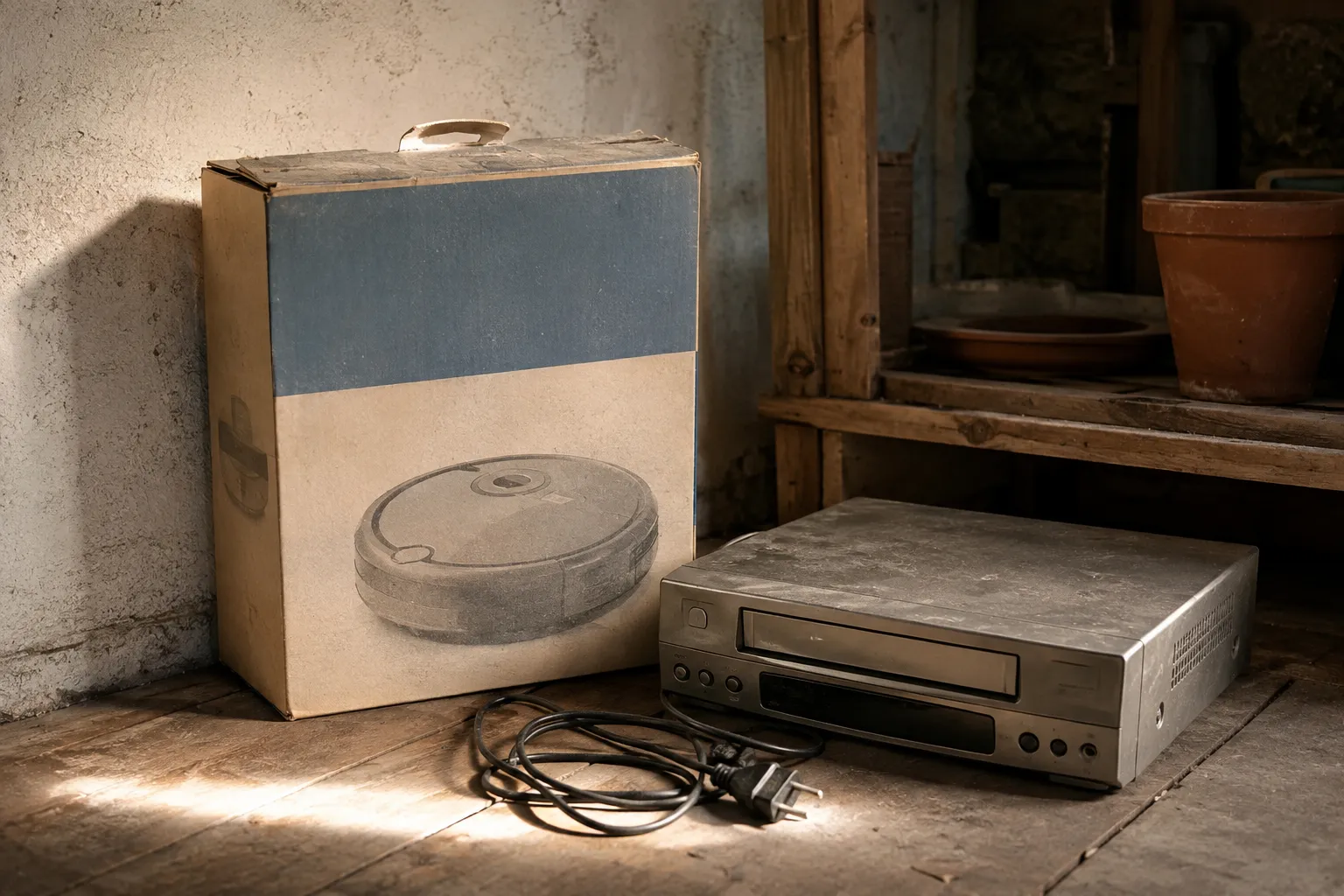
Skincare, food, medicine, and cleaning products have a shelf life; time begins to move from manufacture or from opening. Appliances and information products are affected by plugs, charging cables, consumables, repair support, and the replacement of specifications. Paper may take on moisture, fabric may grow mold, wood may be eaten by insects. When items sit in unventilated, layered piles, environmental wear may also speed up.
Unused time can be thought of as two stages. In the first, value is stopped in place: the thing may still be usable, it simply is not flowing. In the second, time and storage conditions begin to consume reusability. There is no clear alarm between the two, so it is easy to mistake “it hasn’t broken yet” for “there will still be time later.”
Some items have only waited too long
At organizing visits, large numbers of unopened online-shopping boxes have been opened, and the Japanese skincare inside had mostly expired two or three years earlier; unused high-end fragrance had already oxidized. There were also expired sauces stored in a family-workshop kitchen, and cosmetics in a room kept until they could no longer be used.
These items were not used until they broke. They never entered a context of use. The time they were stored looked like careful keeping; in fact it gradually reduced the destinations still available.
But time does not affect every item in the same way. A batch of tiles left on a front balcony for twenty years, because the material was stable and had not taken on moisture, was in the end still matched by the homeowner to a taker. Another treadmill that had sat for more than ten years had no obvious fault, yet was limited by bulk, moving, and not finding a taker in a short time, and was finally taken apart and sent to recycling.
These two examples remind us that an item’s lifespan is decided not only by whether the material is damaged, but also by storage conditions and how it can circulate.
“It still works” is not yet a complete answer
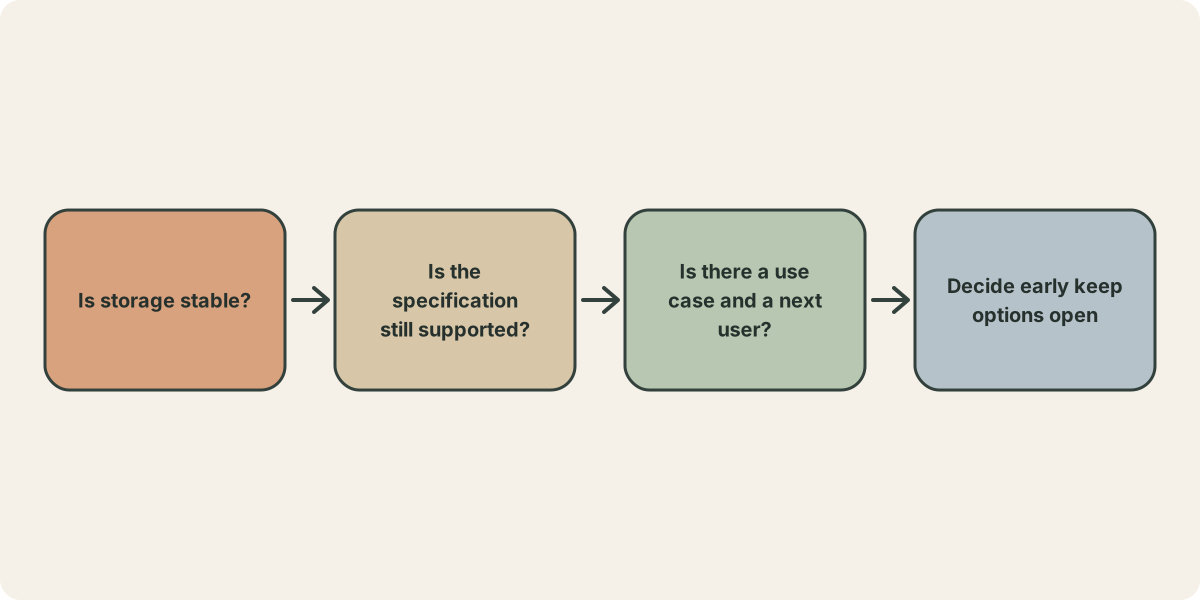
To judge whether an item still has a chance of reuse, four things can be looked at first: whether the storage environment is stable, whether the specification is still supported, whether there is a clear context of use, and whether a suitable channel for a taker can be found.
Supplies with a shelf life need to be judged earlier. Appliances and information products, even if they have not failed, may have their practical lifespan shortened because parts, consumables, or repair support disappear. Furniture, building materials, and complete sets of books may sit longer, yet may be hard to pass on because they are too bulky or the channels are too few.
So “it still works” only answers the item’s present condition. It does not answer whether it can circulate smoothly. Reuse is an opportunity formed together by the item, the storage environment, the user, and the channel.
Judging a little earlier leaves one more path
The last time an item is used is usually a good moment to check its destination again. Not every thing unused for a year must be sent away at once, and not every thing left for a long time has necessarily failed. What to look at is whether it still has a clear context of use and a chance of being taken on.
For the same item, deciding a few years earlier makes it more likely still to be a supply that can be given to someone else; left a few more years, what remains may only be the responsibility of hauling it away and handling it. This is not an encouragement to throw everything away quickly. It is a reminder not to postpone judgment until the options have already disappeared.
Circular economy does not deal with “everything must be kept.” It lets items have a chance to be used again before they lose function; when they are truly no longer suitable for reuse, they then return to materials or to a final disposal system.
That an item has not broken does not mean there is still time. Whether it can be seen, used, or given to the next person at a suitable moment is also part of its value.
Source: Liao Hsin-yun’s Facebook page (content compiled and adapted)