Many people treat organizing as a major event: pick a weekend, clear out a large amount of things, take a photo once everything is put away, and the job should then be done. A home, however, is not a showroom. Some people go to work every day, care for family members, and drop off and pick up children; others are facing physical changes or a turning point in life. Things keep being used, brought home, and set down. If organizing is treated only as a one-time task, it is easy to feel that you have failed again when piles reappear.
On organizing visits, the term “re-cluttering” is often used to describe a place that has just been organized and then filled up again. The word need not be taken as blame. It is more like a reminder: if the rules for how things come in, how they go back after use, and who shares in the upkeep have not changed, existing habits will naturally fill the space again.
This article draws on organizing records from individual households. It is not long-term statistics or a general conclusion. Some follow-up situations were tracked for only a little over a month, so no method can be guaranteed to work on that basis. These experiences are enough, however, to help us shift the question from “why is it messy again” to “how can daily life need less of a major organizing overhaul.”
Re-cluttering is an expected outcome
A homeowner in her twenties found that, less than six months after the first organizing session, her room had returned to its former state, so she booked a second appointment within six months. In another household, new things were being piled back in even as items were being cleared during the organizing itself. These two cases are few in number and cannot support the inference that every household will do the same, but they point to a common blind spot: emptying a space is not the same as changing the way that space gets filled.
An older resident who served as neighborhood chief was very cooperative during the organizing, and progress was visible every day, yet food, stationery, and gifts soon reappeared in places that had just been cleared. In the source record, she was in the habit of keeping things where she could see them; combined with a less reliable memory, she would often put something away and forget it the moment she turned around. Her original logic of storage was still at work, so newly emptied surfaces were quickly put back into use.
Re-cluttering is not a failure of the space, nor does it have to be read as weak willpower. It means that the original ways things enter, are stored, and are used in daily life have not been adjusted. If you still need to see something in order to remember it, still have no fixed places, or still have large amounts of items coming in, a return to disorder is an expected outcome—not an accident that suddenly happens one day.
Things without a place will keep looking for a new battlefield
Another older resident, seventy years old, lived in a room of about four ping. When the wardrobe was full, clothes were hung on the door handle; when the door handle was full, they moved to the bedside; when the bedside could hold no more, another drawer cabinet was bought. Things kept changing places. Each move looked like something had been dealt with, yet nothing had a true home. The room therefore gained many temporary storage spots, along with items that duplicated the same function.
This case shows that organizing is not about moving things out of sight, but about giving what you keep a place it can return to. Items without a place occupy the nearest, most convenient surface; when every surface is taken, a new storage container becomes the next dumping spot. People then find it even harder to locate things, and even easier to buy another when they cannot find one.
From the perspective of sustainable living, a fixed place is also linked to buying fewer duplicates. Only when you know what is already in the house can you keep items of the same function from entering again and again. This is not a demand that every home achieve perfect categorization. It is first about settling high-frequency items that are easy to buy twice, so that everyday choices do not have to rely constantly on memory and last-minute judgment.
Rules need to cover entry, use, and putting things back
After a third organizing commission, one homeowner and her family set three rules: put things back when you finish using them; every item has its own home; do not buy another item that does the same job. The three sentences are simple, yet each corresponds to a different link in the chain.
Putting things back after use addresses the small actions that follow daily use, so that small piles do not slowly become a major project. Giving every item a home addresses storage location, so things do not have to keep changing battlefields. Not buying duplicates addresses the entry point, so new volume does not immediately squeeze the existing space. If any one of the three is missing, upkeep becomes harder. If you only require things to be put back, yet items of the same function keep increasing, even the best places will not be enough.
Rules, however, do not take effect just because they are posted on the wall. This homeowner also mentioned that in the past she always organized by herself, and would get angry when family members left things lying around. If only one person is responsible for upkeep while others still bring things in and set them down the old way, the rules eventually become one person’s job of finishing up after everyone else. This time, the family joined the discussion together, and the children also began putting their toys away. The source record shows that the early stage did not go smoothly, and there is no complete follow-up on whether it held over the long term. That is precisely the limit any household needs to face honestly.
Shrink the goal to something you can do every day
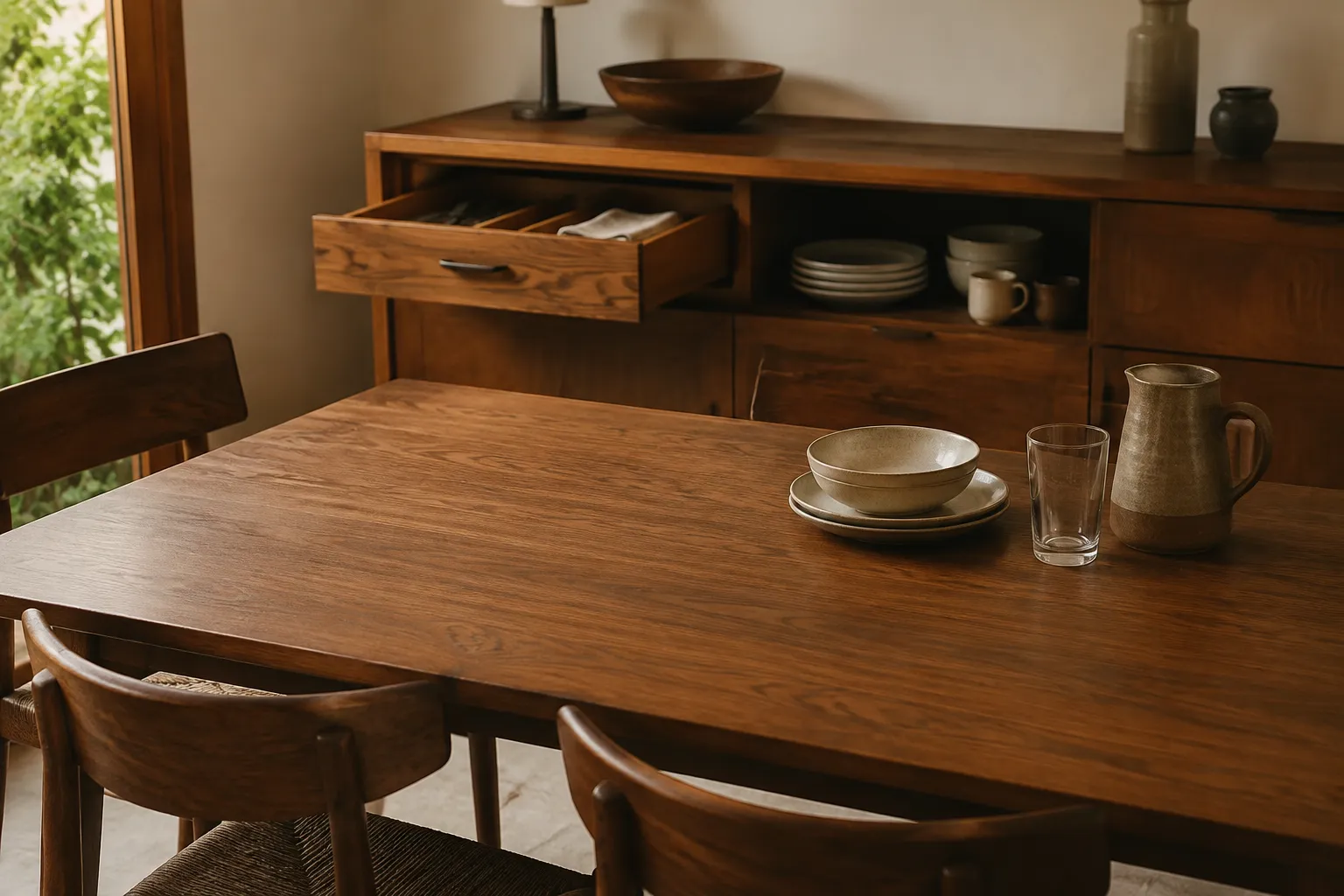
Approaches that last are usually small enough that you do not have to wait until you feel highly motivated to start. After organizing, one father set himself only a single rule: clear the dining table every day. The dining table is the surface most often used in shared family life. Holding that line means keeping, every day, a reset point where people can eat, write, and talk things through.
The value of this practice is not that the table must be perfect, but that it shrinks upkeep into a repeatable action. Rather than waiting for the next big clean-up, restore one place to a usable state before the day ends. When family members see a surface reappear, it also becomes easier to understand that things need not permanently occupy every space.
The homeowner mentioned earlier, who organized twice within six months, had a different experience after the second session. At the follow-up visit the room was in good condition, and a little over a month later she also sent photos showing that it was still holding up well. This tracking period is limited and cannot be written up as a permanent result. Her own explanation was that, once she began thinking about her future life, she looked back at her consumption habits seriously for the first time, and also tried to slow down. Upkeep became possible not only because storage methods changed, but also because the direction of her life began to be reconsidered.
The premise of upkeep is that the people doing it still have capacity
Organizing is often treated as a household skill, as if more self-discipline would be enough to get it right. Everyday upkeep, however, takes time, physical energy, and mental energy. If a person is already spent from caregiving, work, or emotional strain, even the most finely drawn rules will be hard to sustain. Taking care of yourself is not an extra condition added on top of organizing. It is the foundation on which upkeep can exist at all.
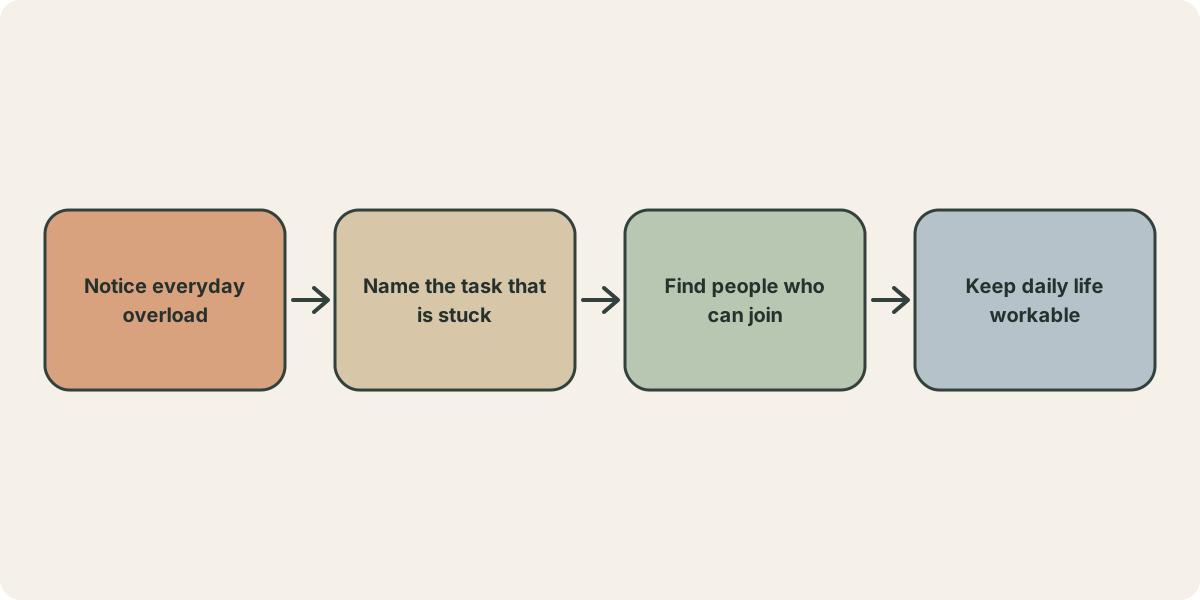
A sustainable household rule should therefore ask not only “where should things go,” but also “who can do this together.” You can start with the smallest shared area and jointly choose one place to restore every day. You can check, before bringing something new home, whether a similar item is already there. You can also set a limited holding place and a review date for things you cannot yet decide on. The point is not to add more rules, but to make the rules match the scale this household can actually manage right now.
A photo taken on the day organizing is finished can record, at most, a single moment. What is truly worth watching is whether, a few weeks later, there is still a path you can walk, a table you can eat at, things you can find, and a way of keeping it up that does not have to be borne by the same person alone. When organizing shifts from a one-time event into a small, steady rhythm of living, a home has a chance to stay usable through change.
The father in the source said that taking care of a home is not a skill you are born with; looking at methods alone is not necessarily enough—you have to discover problems slowly in actual living. That observation is a good way to look at re-cluttering: it is not a grade handed back after you have turned in the assignment, but information for adjusting the rules next time. If the dining table is always the first to fill up, it may be time to rethink the storage and put-away process around it. If a certain kind of item keeps appearing again and again, it is worth looking back at whether the entry point is too wide.
Not chasing a one-and-done result also gives a household room to stay flexible. Members’ work, studies, health, and caregiving needs all change, and rules that once fit may need updating. After a period of time, you can look back together: which places actually work well, which rules only add pressure, which items are no longer needed. Upkeep is not about locking in a look that never changes. It is about letting the living space adjust with life and remain kind to the people in it.
This kind of review can also keep organizing from becoming a one-way demand. When a rule keeps not getting done, understanding where it is stuck is more useful than simply asking for more self-discipline. Perhaps the place is too far, the container does not work, or the person in charge no longer has capacity. Once the actual obstacle is found, the approach can be adjusted, and upkeep can become a daily practice that everyone can complete together.
Source: Liao Hsin-yun’s Facebook page (content compiled and adapted)