Some items make it out the door not because they are especially valuable, but because someone happens to know who needs them. That kind of “happening to” can be very warm, yet it is not enough to become a method most households can rely on.
A still-usable treadmill sat by the door for two days and never found a taker. Another household gave a complete set of books and paper materials to an organization because they happened to find a clear need. Goodwill was present on both sides. The difference was whether someone could complete the matching and the delivery.
Finding someone is only the first step
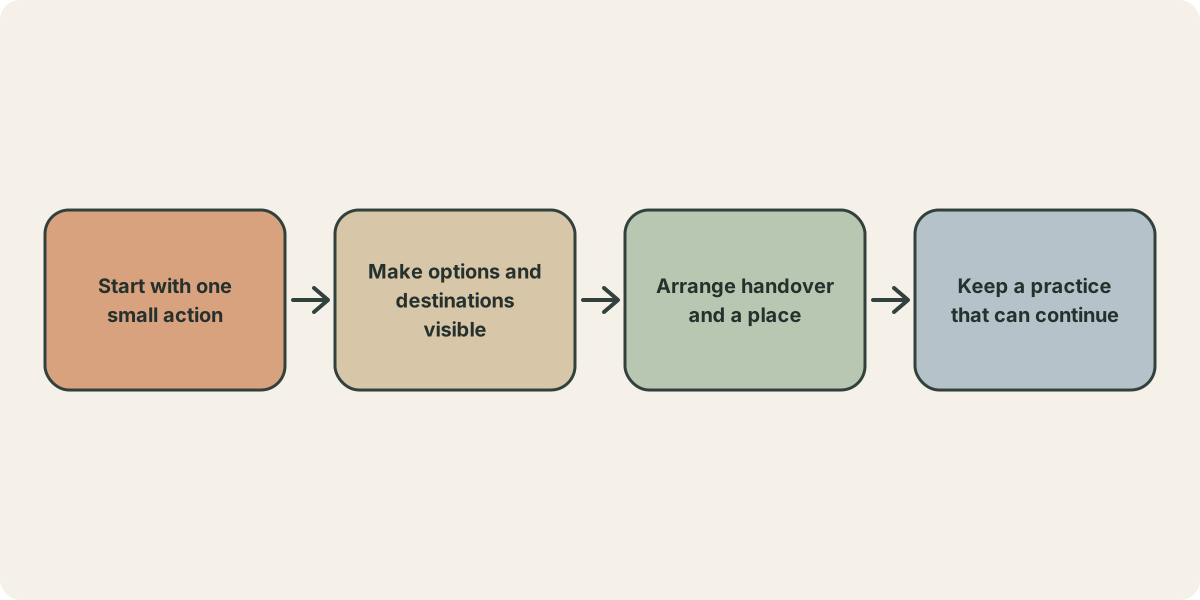
Passing things on is often imagined as posting a message online, but the actual process is longer: photographing, describing the condition, confirming the other person’s need, answering questions, arranging a time, and finally handing the item over. Large furniture, appliances, or items in bulk also need a vehicle and people to carry them.
For caregivers, dual-income families, or people with limited mobility, this work can easily exceed what they can manage. Without support, even items in good condition may enter the disposal system because this stretch of the path cannot be handled.
Do not treat moving things around indoors as circulation
One homeowner cleared out two large bags of items; in the end, most were taken back into their own rooms by relatives living in the same house. The bags left their original place, but they did not leave the household’s total stock, and no one confirmed whether they would be used again. This is not uncommon: items simply move from one cabinet to another, and the problem is postponed rather than handled.
The basic boundary of passing something on should be this: the item leaves the original household, and there is a reasonable chance a new user will take it up. If it only moves into a relative’s or friend’s storage space, or if things in poor condition are handed to someone else, resource waste has not truly been reduced.
What gaps a community can fill
Community activities, schools, social-welfare groups, and local organizations may not be able to receive every item, but they can make it easier for information to meet. For example, they can clearly announce what categories they accept, hold regular exchange hours, provide a trusted donation channel, or connect people with lawful disposal and repair information. For large objects, how moving costs and responsibility will be shared must also be stated in advance.
These arrangements are not meant to create new stockpiling points, but to give items a destination that can be followed. Short-term holding must have a time limit, a condition check, and a rule for what happens if no one takes the item; otherwise a well-intentioned place can become another warehouse that is hard to organize.
Turn luck into a more predictable option
No system can guarantee that every item will find a taker, and keeping dangerous or unusable goods should not be encouraged. But when information, time, and moving are no longer borne entirely by one household, reuse need not depend only on “happening to have someone who wants it.”
Helping items find a suitable destination is a form of collective life design. It means that being reluctant to let go need not equal piling things up, and that people willing to take things on can more easily find resources that actually suit them.
Source: Liao Hsin-yun’s Facebook page (content compiled and adapted)