What makes belongings left behind hardest to sort is often not the moving, but the judging. A watch, a stack of letters, an old bookshelf: while the owner is still here, they may know in seconds who should receive it, or whether it can be given away. After they are gone, the family may spend a whole afternoon and still be unable to decide. What they fear is not the objects themselves, but failing the person who can no longer explain why.
End-of-life organizing does not mean emptying a life ahead of time, nor asking elders to throw their memories away. It means, while a person can still speak, letting them keep the right to choose—and sparing the family some of the guessing and mutual hurt that come later.
The same object can look different to different family members
When two sisters sorted the space their parents had left, they had different ideas about teaching materials, slides, clothing, and a bookshelf their father had made by hand. One wanted more to keep; the other cared more about the overall space and placing things properly. Both valued their parents, and neither was trying to make things hard for the other. They simply carried different memories, lived in different conditions, and had different capacity to handle it all.
This kind of disagreement is ordinary. Belongings left behind carry feeling, usefulness, and bulk all at once; there is no single answer that fits every family. The problem is that the person who best knows what the things mean often never leaves the answer behind.
“Take it if you can use it” is not yet an instruction
Some elders keep their children’s textbooks, notes, or clothing for decades, then ask them on a visit home to “see if you can take anything.” For the elders, this is a way of keeping the relationship. For adult children who no longer have the space, it may feel like nothing more than a storeroom they have to face. Both feelings are real; without speaking them clearly, it is hard to understand each other.
A fuller instruction can include: why this object matters, who should decide, and under what circumstances it may be passed on or disposed of. Drawing only a circle of things that “must not be touched” still leaves the later burden to someone else.
If you do not decide, the decision does not disappear
One elder, while still living, would not let the family sort the many gifts and belongings in the house. After they passed away, the main caregiver, while still recovering physically, handled more than eighty bags of items and a volume equal to one and a half clearance trucks. This is a single case; the responsibility cannot be assigned to anyone. But it makes one thing clear: if the choices are not made by the person themselves, they usually fall on a family member at a hard moment.
The heart of end-of-life organizing is therefore not efficiency, but fairness. It lets a person decide which matters need not be left for the family to vote on later, and it keeps caregiving from having another enormous load added at the moment of loss.
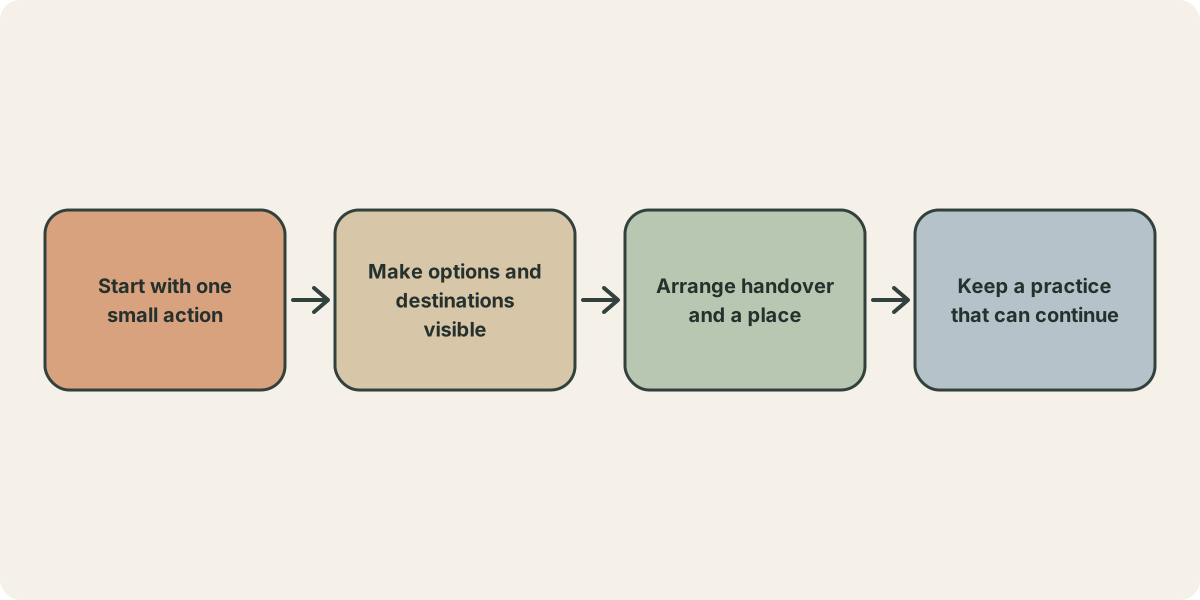
Start the conversation with one drawer
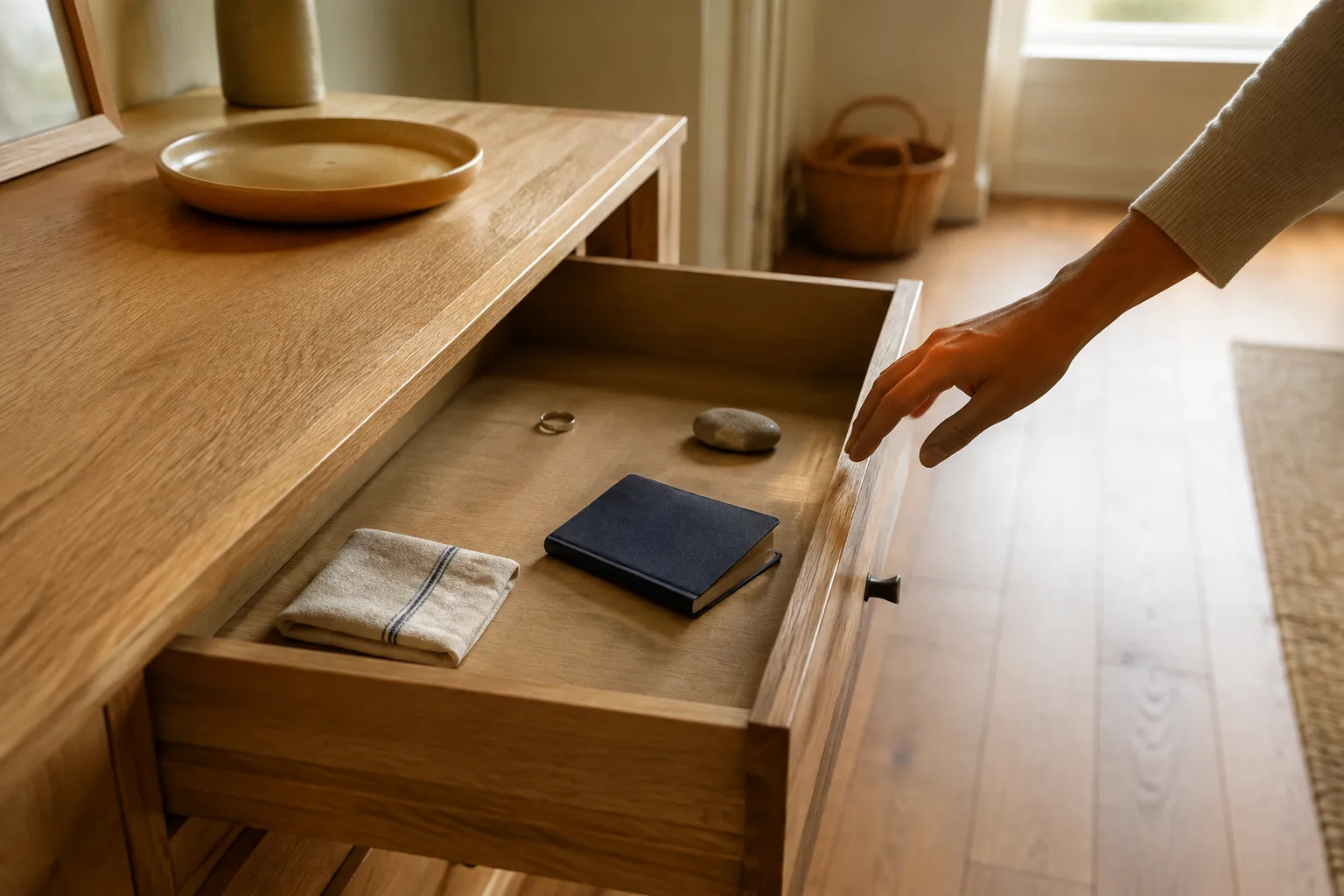
You do not have to take on the whole house at the start. You can choose one drawer, one box of photos, or a small cabinet, and ask three questions: Why am I keeping this? Whom do I want to know this? If one day it is no longer needed, where can it go? Writing the answers on a small card or a simple list is already an important instruction.
If the family is willing, you can look together, listen to the stories, and confirm what stays and what goes. The aim is not to make everyone agree with every choice, but to let the owner of the things be properly heard. Keeping the right to choose for yourself is also a way of leaving the relationship a gentler way out.
Source: Liao Hsin-yun’s Facebook page (content compiled and adapted)