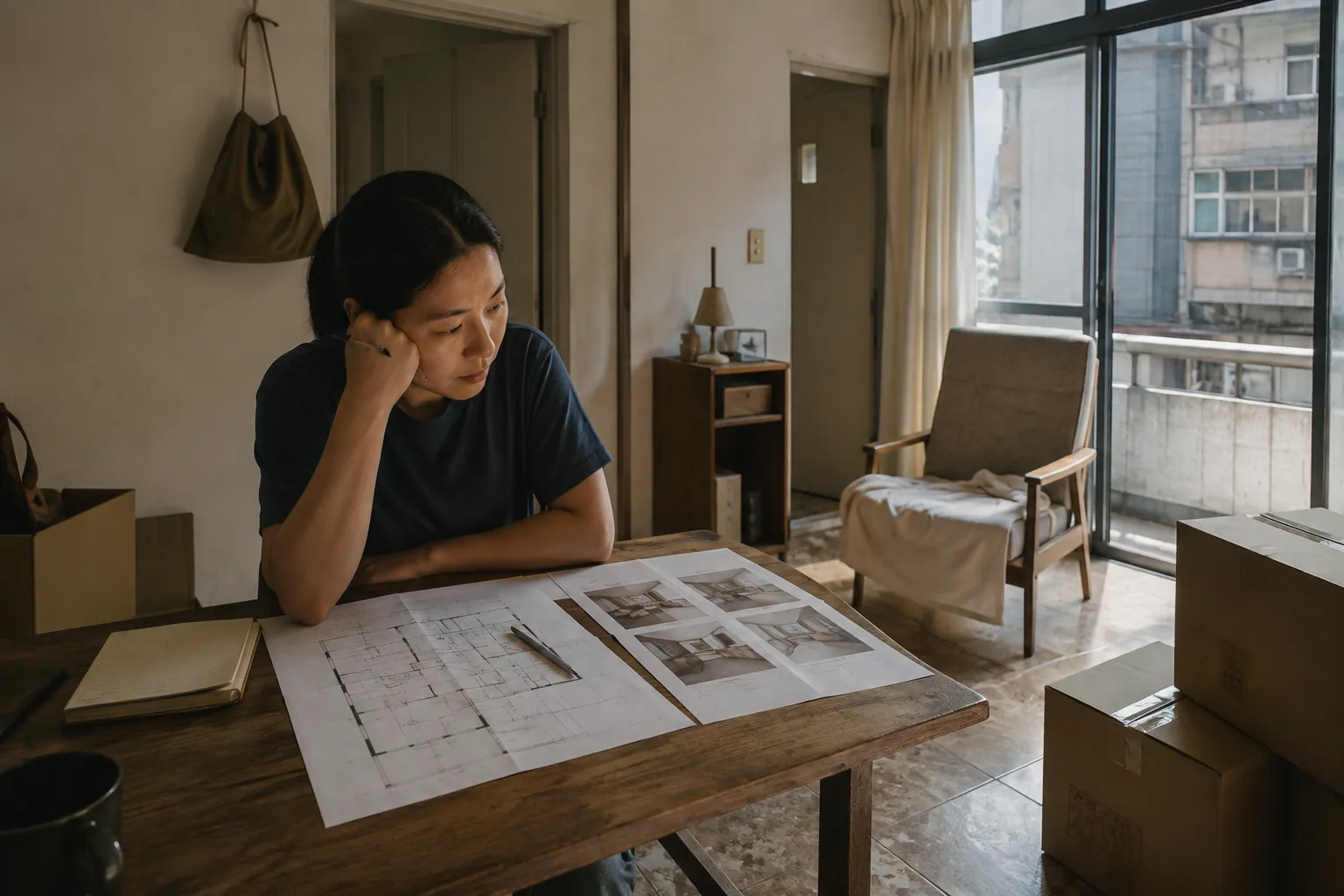
The owner of a second-floor home bought four dehumidifiers. At first glance, this looks like a story of a house that was too damp, so a few more appliances were bought. In the source case, though, sunlight rarely reached the floor-to-ceiling windows. In the whole house, only two corners still let you feel the weather: one was the window of a room that faced a fire alley at an angle; the other was beside the barred window on the rear balcony. Later, a new building went up next door, and even that remaining light disappeared. Four dehumidifiers were the result of living conditions that had been a poor fit for a long time.
This is one person’s housing experience; it cannot be used to judge other homes or their need for equipment. It does, however, raise an important question: when discomfort comes from daylight, ventilation, orientation, or the surrounding environment, can more effort at organizing—and more furniture and appliances—really make life better? Sometimes, looking again at the housing choice itself may be more worth discussing than endlessly patching the interior.
Organizing can improve many things; some conditions it cannot change
Organizing can make belongings easier to find, restore walkways, reduce duplicate purchases, and make cleaning and care possible. These changes matter, especially for families living together: a usable space can ease a great deal of daily friction.
Some conditions, however, lie outside the reach of storage skills. Window orientation, floor level, distance from neighboring buildings, ventilation paths, sources of noise, and commuting hours all affect whether a person can rest at home. If daily dampness, dimness, or stuffiness comes from these structural factors, adding dehumidifiers, lamps, cabinets, or décor may only pack more equipment into a space that is already limited.
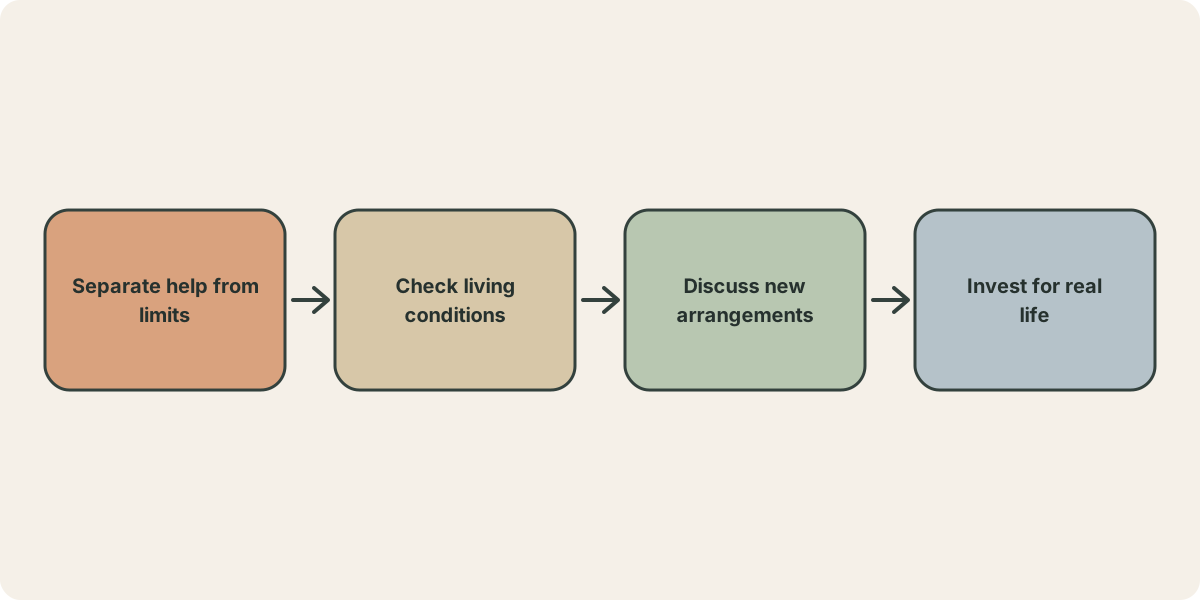
In the source, another homeowner had worked hard at cleaning and storing things, and spent money replacing furniture, yet still felt unhappy. Looking back later, she saw that the problem was not that she had not tried hard enough: the house had poor daylight, and a sense of comfort could never be made up by those efforts. This is not to deny the value of improving a home. It is, first, to tell the difference: can the problem in front of you be handled by organizing, or does it need to be thought through from the living conditions themselves?
Putting “once you buy, you live there for life” up for examination
A house is often treated as a backdrop that cannot be moved. Because it is expensive, carries a sense of security, and is often bound up with family memory, people naturally feel that once they have bought it, they ought to keep living there. The homeowner in the source thought this way too: even when living there felt wrong, they felt there was nothing to do but endure it.
But housing is not a one-time choice; it is a life that happens every day. Place of work, household size, care responsibilities, and health can all change. A house that fit at the start may no longer fit a few years later. Looking again does not mean you must sell, move out, or chase a larger home. It means allowing yourself to take “I must live here forever” from a given fact and turn it into a hypothesis that can be discussed.
The process can begin with concrete questions: is the greatest discomfort at home daylight, ventilation, noise, circulation, or the commute? How long has it lasted? Have existing improvements actually worked? If you stay, what equipment, repairs, or renovations will still need to be put in? Writing the questions down can keep a decision from being made on a moment of frustration alone, and can also bring into view costs that have long been overlooked.
Reallocating an existing home is a possibility, not a standard answer
The source puts forward one approach: if you already have a home but living there feels wrong, you can consider renting out the original house and, with the rent plus a difference you can afford, look for a place that better fits the present situation. The house does not disappear as a result; someone else uses it. The tenant may also occupy a home that has already been renovated and better matches their own needs, avoiding the need to keep buying equipment or undertake another large-scale renovation simply in order to hold on.
The source once included an on-site estimate: a renovated three-bedroom, two-living-room unit had a monthly rent about NT$10,000 higher than an unrenovated unit in the same community. If renovation costs are counted at NT$1 million, and one simply projects from an extra NT$10,000 collected each month, it would take more than eight years to recoup the outlay—not yet including appliance depreciation, maintenance, or vacant periods. These figures and the time span have no verification record. They can serve only as a case estimate for understanding the relationship among rent, renovation outlay, and holding costs, and cannot be used to judge the market.
Renting out and then renting elsewhere is therefore not investment advice, and it does not suit everyone. It is only a reminder that between an existing house and continual extra purchases, there may also be the option of reallocating the right to use it. Whether it is feasible should be assessed one by one against the household’s finances, commute, schooling, lease, mortgage, and care needs.
Some constraints cannot be decided by one person alone
Housing choices are not a matter of personal preference alone. In the source, one four-story home belonged to an owner who had cared for an elder living in the same household for thirteen years. While that responsibility remained, the space at home could hardly be rearranged to suit their own needs. In another old family home where three generations lived together, six adults had only four chairs. Only years after the younger generation married did a partner become willing to come forward and negotiate, and the communication itself took a long time.
These cases cannot be taken to represent all multigenerational families. They do, however, remind us that whether to move, and how to live, often involve care commitments among family members, affordability, and relations of power. If a home is jointly owned, if someone depends on a particular place, or if a change would affect others’ daily lives, the decision needs more negotiation, and it needs to bring into the conversation those most easily overlooked. No housing choice should be packaged as an answer that everyone can achieve.
When housing quality is discussed in public, it is also important not to treat every difficulty as a matter of personal choice. Housing supply, tenant protections, accessibility, where work is located, and family support all affect whether a person has room to move. Being able to choose a home again is itself a resource that not everyone holds equally.
Let what you put in actually answer the needs of daily life
Sustainable living is not only buying one fewer item. It is also asking, before every outlay: will this input address the real problem? If dampness comes from poor ventilation, buying more storage boxes will not help. If the quality of rest is continually affected by daylight and noise, repeatedly replacing furniture may not bring improvement either. Identifying the level of the problem first is the way to keep equipment, renovation materials, and time from being poured, again and again, into places that cannot solve it.
Of course, changing homes is not always possible. Even if you cannot move for now, you can start with a smaller inventory: reduce unnecessary equipment and piles, clear ventilation paths, record light and humidity at different times of day, learn about the lease or community rules, and discuss with family what next step you can bear. These actions do not guarantee immediate improvement, but they can gradually bring the choice back from helpless endurance into a range that can be assessed.
A comfortable home need not be lavish. What matters is that it can support daily rest, care, and living. Organizing belongings is important. Equally important is allowing yourself, when conditions no longer fit, to ask once more: is there another way I could live better?
Source: Liao Hsin-yun’s Facebook page (content compiled and adapted).