Seeing a cluttered living room, unopened packages, or clothes piled in a corner, it is easy to conclude that the people who live there are not diligent enough. But the look of a home often speaks of living conditions sooner than it speaks of anyone’s will. If each day is spent moving between work, school runs, preparing meals, caregiving, and sleep, the time a person can actually command is cut into very small fragments; the energy and judgment that remain may not be enough to deal with a whole batch of things.
Organizing is not merely moving things out of the way. It requires a person, at the same time, to see how much there is, recall what each item is for, decide what stays and what goes, and then find a place for what is kept. This work needs quiet, unbroken time. Treating all of a home’s mess as one person’s failure of responsibility often leaves families that truly lack support to bear still more blame.
Organizing Needs a Stretch of Uninterrupted Time
Cleaning can begin with ten minutes: wipe a table, wash a few bowls; stopping does not undo the result. Organizing is different. Once everything has been taken out of a cabinet, it must first be looked through, sorted, and then put back in a usable place. If a phone call, work, or a family member’s need interrupts the process midway, the space may become even harder to use for a while.
The market stallholder in the source leaves home very early each day, and after closing the stall still has housework and children to tend to. She says home is only a place to come back and sleep—not because she does not value where she lives, but because a day rarely holds a complete stretch of time in which life can be rearranged. Similar situations also arise for shift workers, self-employed people, dual-income parents, and long-term caregivers. A shortage of time is not necessarily a shortage of income; it refers to whether a person has any stretch of time that is not continually taken up by others’ needs.
Why Housework Is Always Left Until Last
When a household and a livelihood share the same people, priority usually falls first on what cannot be postponed: taking orders, getting meals out, follow-up clinic visits, school runs, caring for young children. No guests are waiting at home, and there is rarely an immediate deadline, so organizing is easily pushed to last.
This is not to attribute all clutter to being busy. Things flowing in too quickly, storage that does not fit how it is used, or a lack of shared division of labor among family members can all make the situation worse. If, however, we skip over working hours and the caregiving load and only urge one person to “tidy up when you have a moment,” we take a result produced by shared living conditions and hand it back to that one person to bear alone.
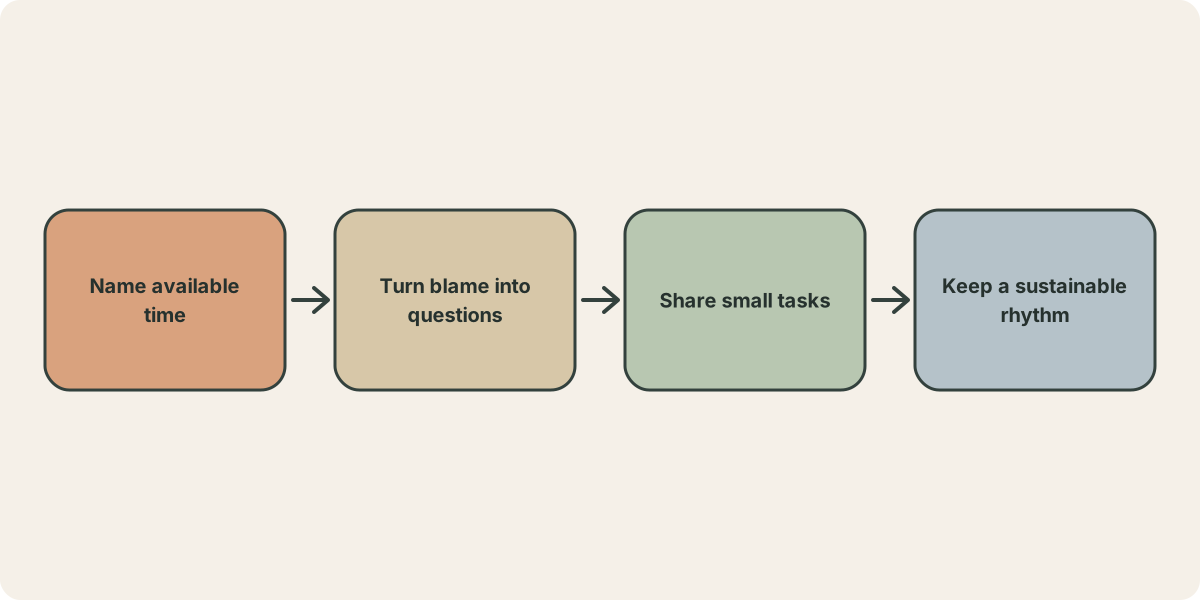
First Replace Blame with Questions That Can Be Answered
Rather than asking, “Why haven’t you put things away again?”, first work together to find the stretches of time that most often get stuck: is there no energy left after work, or is the weekend always filled by other demands? Which area, once messy, affects eating, bathing, or rest? Which tasks can different family members handle separately? These questions will not immediately reduce the number of things, but they can turn a vague frustration into a more concrete arrangement.
Start with low-burden changes. For example, choose a place that does not require a great deal of judgment and deal only with the dining table or the entryway; set a holding place each for packages, clothes, and recyclables; agree that one family member will handle a particular category, rather than waiting for the same person to finish everything in one weekend sweep. The goal of organizing can also begin with making a path walkable and a table usable, rather than turning the home into a place with no trace of use.
Leave a Sustainable Rhythm of Daily Life
Sustainable living is concerned not only with whether things can be used for longer, but also with whether a family has enough slack to keep daily life going. A home that can be put right only by staying up late is hard to keep in order over the long term; a home that hands all the tidying to the busiest person also tends to let relationships grow taut under blame.
When a home begins to fall into disorder, do not rush to decide who has not done enough. First look at whether this family has people whose time can be arranged together, rest that can be counted on, and a stretch of time in which organizing can actually begin. When organizing moves from a personal performance review back to being part of the support for daily life, it has a better chance of lasting.
Source: Liao Hsin-yun’s Facebook page (content compiled and adapted)