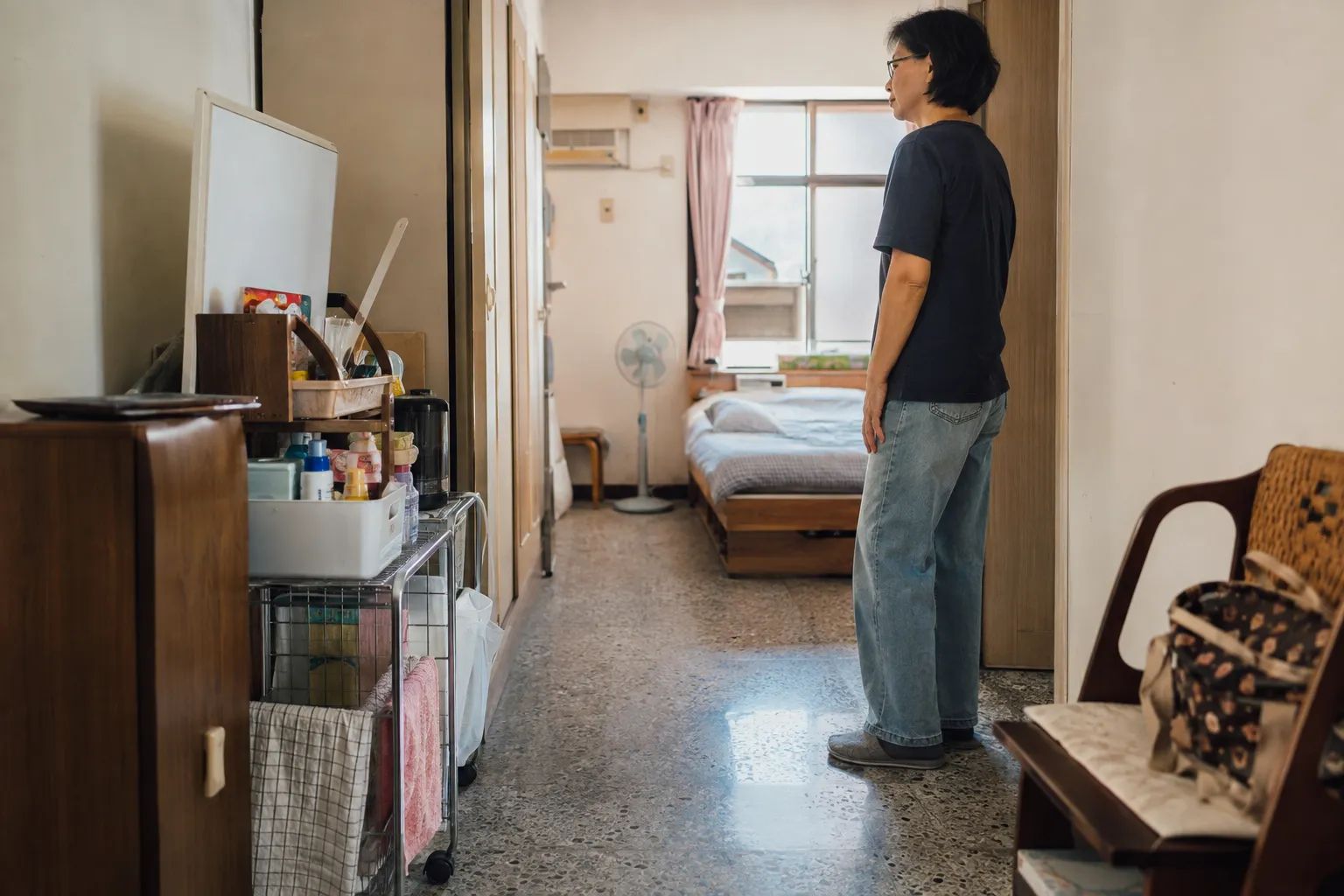
Having many things at home does not necessarily mean the same kind of problem. Some families are only temporarily busy—tabletops cluttered, clothes not yet put away—yet people can still sleep, cook, bathe, and walk. In other cases, belongings have already blocked the hallways and jammed the doors, and the original functions of daily life have gradually disappeared. These two situations should not be handled in the same way.
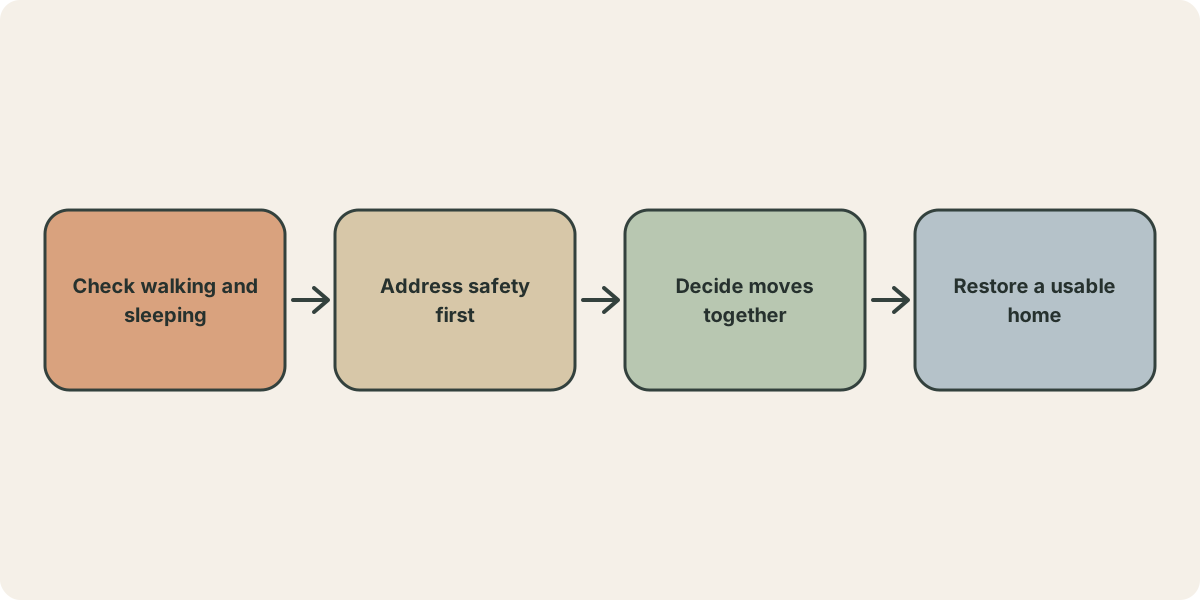
When basic daily living has already been affected, the first step is not to demand that the person immediately throw everything away, nor to rush to judge whether they have some kind of problem. What matters more is to confirm: Is this space safe now? Can people pass through, rest, keep clean, and leave in an emergency? This line, drawn according to the functions of daily living, can help family members set an order of action that is less hurtful.
The Key Is Whether Daily Life Is Still Possible
Neither the price nor the quantity of things, nor how plentiful they appear, is enough on its own to judge the situation. Some people keep many old containers and still use every space as usual; others do not necessarily have that many things, yet cannot get in or out because everything is packed into a narrow place. What is more worth checking is whether the bed can still be slept in, whether the kitchen can be used safely, whether the bathroom can be cleaned, whether the main walkways are clear, and whether the person is still willing to let necessary repair or support workers in the door.
These questions need not be used to label anyone. They only show whether the environment has already affected health and daily life. When the standard of judgment returns to function, family members are also better able to avoid the tug-of-war over whether things are “worth keeping,” and to address first the basic needs that everyone can understand.
Safety Comes Before the Goal of Reducing Things
If the functions of daily living are already obstructed, what can be checked first includes the main passages, whether doors can open, the area around outlets and electrical cords, the cooking area, and the route out of the home. This is not a diagnostic list; it is a way to help family members start from the most urgent places. Clearing a path that can be walked, allowing a door to open fully, and moving combustibles away from heat sources are often more direct than dealing with everything in the house at once.
When taking action, still explain the purpose as much as possible, and keep the person involved. If you can first agree that “today we will only make the hallway walkable again,” the focus is no longer on who is right or wrong, but on jointly maintaining one function of daily life. When there is immediate danger, or a situation that cannot be handled on one’s own, seek appropriate professional and local support; do not leave a single family to bear it alone.
Throwing Things Away in Secret May Close the Door Afterward
When families face severe accumulation, they often feel so anxious that they want to clear things while the other person is away. This may free up space for a short time, but it can make the person feel betrayed, and afterward even less willing to let anyone near their belongings. For some people, objects are not only about use; they are also tied to memory, identity, and a sense of control over life.
Respecting the right to choose does not mean leaving danger unattended. Actions can be divided into two kinds: first, jointly addressing clear safety obstacles; as for other items that involve private memory and whether to keep or let go, discuss them slowly through reversible means such as photographing them, setting them aside for now, and agreeing on a date to look again. Letting a person know they still have a right to speak often sustains cooperation better than demanding that everything be finished in one go.
Make the Home Usable Again, Not Perfect
What sustainable living seeks is not a tidy picture, but that those who live there can use the space safely and with dignity. Only when a home once again has a bed to sleep in, a table to eat at, and a path to walk is there room to talk about the next steps of sorting, reducing, and deciding where things go.
Loss, illness, a break in work, or the pressure of caregiving in a person’s life can all cause someone to lose, for a time, the ability to organize. This article does not treat these experiences as a single cause, nor does it diagnose any situation. What family members can do is first put their attention on whether daily life can still function, and let safety and trust both be placed at the starting point of organizing.
Source: Liao Hsin-yun’s Facebook page (content compiled and adapted)