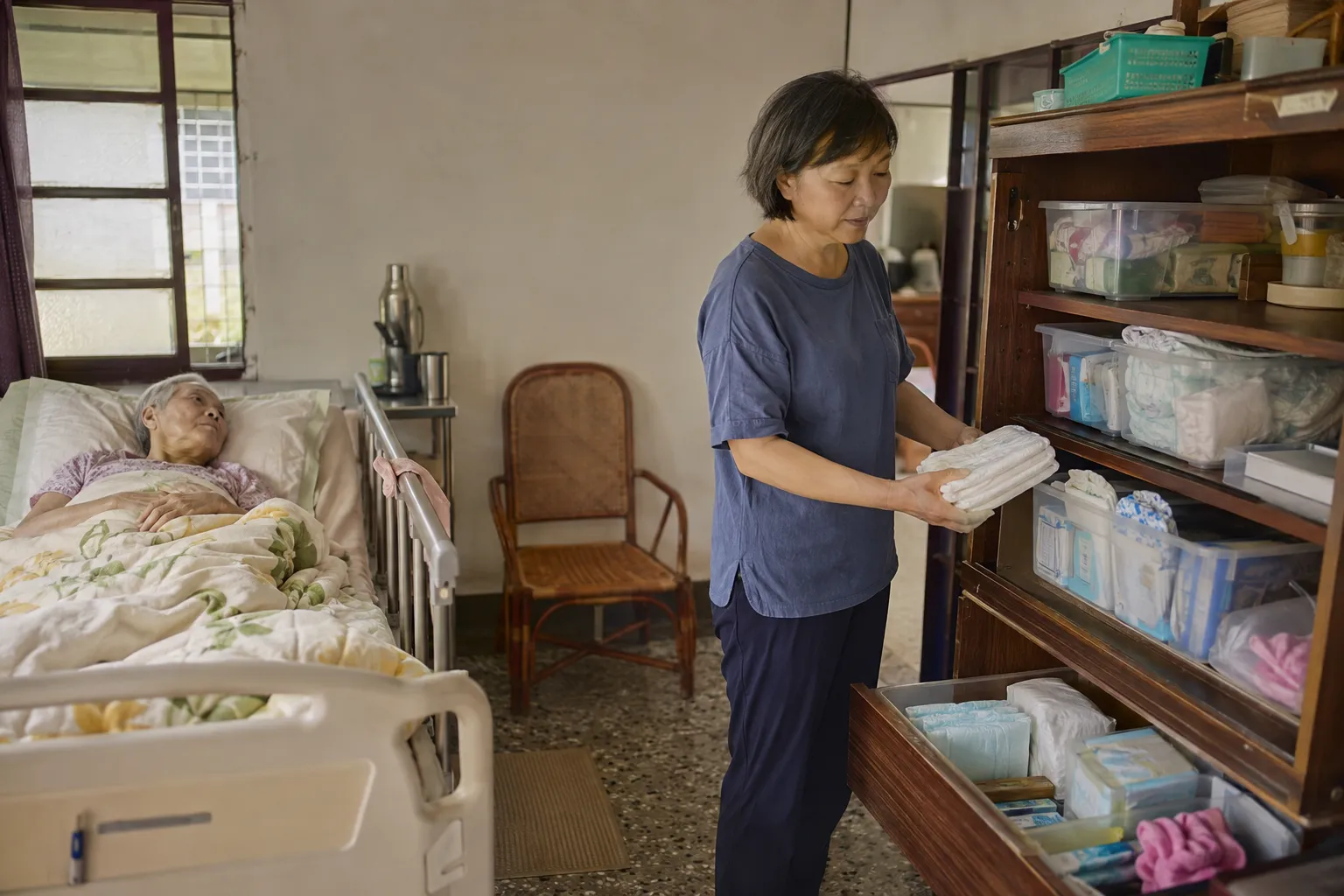
Once a family begins long-term caregiving, belongings often multiply without anyone quite noticing: hygiene products, consumables, assistive devices, backup supplies, and everyday items bought ahead of time for fear of needing them on short notice. From the outside, these piles may look like a loss of control; for the person doing the caregiving, they are often the preparations that keep daily life from being interrupted.
If the only response is “buy a little less,” it is easy to miss that much of what flows into a caregiving household is not freely chosen. What usually needs to be addressed is not blaming belongings for coming in, but giving essential supplies a safe place, and giving items that no longer fit a chance to leave at the right time.
What comes through the door is not only a desire to buy
The first common category during caregiving is medicines, cleaning products, and everyday consumables restocked on a cycle. To avoid running short at the last minute, families often keep a reserve. The second is assistive devices and equipment. After a person’s condition changes, items once in use may no longer be suitable for now, yet family members may not dare to deal with them at once, because it is hard to tell whether they will still be needed in the next stage.
Only the third category is ordinary purchasing. When a caregiver lives under prolonged strain, they may buy extra things that look as if they might come in handy—to save trips back and forth, and to reduce uncertainty. This is not a way of rationalizing every purchase; it is a reminder that the background of accumulation may include caregiving stress, insufficient information, and needs that cannot be predicted.
Keeping things is often the least dangerous option in the moment
The hardest part of organizing is often not failing to see the belongings, but fearing a wrong decision. A caregiver may worry that a family member will need something after it is thrown away, worry about being blamed, and worry that siblings will not understand the situation at the time. So every item is kept, for now. Each choice, taken on its own, is understandable; over the long term, the accumulation may leave the dining table, hallways, and rooms unable to serve their original function.
This also explains why “clearing things out while the other person is away” is not a good method. Behind the belongings there is often a caregiving history and a sense of responsibility; handling them without consent may leave family members feeling unsafe, and even less willing to talk about any change afterward. To let belongings start circulating again, keeping the conversation and the right to choose comes first—more important than aiming to empty everything in one go.
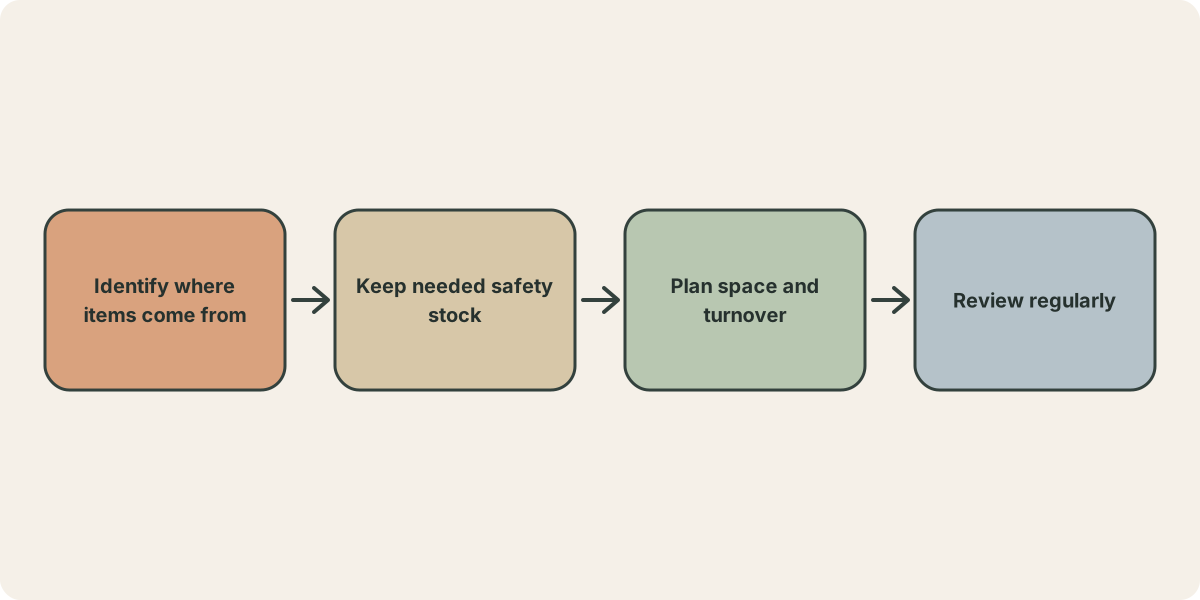
Start by arranging space and turnover
A first step can be to identify what is in active use, what is safety stock, and what has already entered a to-be-confirmed state. Everyday consumables belong where they can be seen and reached; backup supplies can be gathered in designated containers so they do not scatter into every corner. When supplies exceed the capacity set for those containers, that becomes a reminder to take stock again—not an immediate demand to cut back.
For assistive devices or stage-specific items, a stocktake can be arranged when caregiving needs change. The point is not to force the family to decide that same day, but first to note the purpose, condition, and who has the right to decide, then confirm together whether the item still needs to be kept. If there is a suitable relative or friend, community resource, or receiving channel, safety, hygiene, and actual need should also be confirmed first, so that handing things on does not become another form of storage.
Safety stock must not be treated as clutter
Sustainable living is not clearing every cabinet down to the minimum; it is making sure resources can be used correctly when they are needed. Whether medicines, medical-related supplies, and essential consumables should be kept depends on individual caregiving needs; this article cannot offer medical or purchasing advice, and the care team and product instructions should be followed. When piles already affect hallways, doorways, or the area around the stove, deal first with passage and home safety, then gradually discuss other belongings.
Managing belongings during caregiving is part of supporting the family. When someone can take stock together, someone can help move things, and someone is willing to share the decisions, the caregiver no longer has to pile every uncertainty into the home. Asking first “how much has been able to leave over these years” comes closer to the heart of the problem than asking first “why did you buy so much.”
Source: Liao Hsin-yun’s Facebook page (content compiled and adapted).