Some people stand in a messy room not because they do not know they need to organize, but because they do not know what to pick up first. Clothes, dishes, paper bags, packages, and small items with no clear place are mixed together. Every object you touch asks several questions at once: What is it? Should it stay? Should it be thrown away? Where does it belong? If the answers are not ready, action easily stops.
This kind of stalling is not necessarily laziness, and it does not mean a person does not care about their home. When fatigue, caregiving pressure, or emotional load is already high, too many judgments are themselves a burden. Rather than demanding that you put the whole house in order at once, a more workable approach is to redesign the task so that each step requires only one clear decision.
When things are chaotic, the most exhausting part is constant choosing
When items are mixed together, organizing often becomes work without a boundary. Pick up a charging cable, and you have to think which device it belongs to. See a piece of clothing, and you have to decide whether you will still wear it. Come across a sheet of paper, and you have to judge whether it can be thrown away. Many small decisions arrive one after another, draining mental energy before you have even started to move things.
The homeowner in the source described going blank when faced with a pile of clutter, thinking more and knowing less whether to put things away or throw them out. Another, younger homeowner could only sustain brief bursts of organizing energy, because after doing some work, the scene still looked much the same. Their difficulties were different, but both pointed to the same thing: if a task has no clear scope and endpoint, it is hard to feel that you are making progress.
Look for only one kind of thing at a time
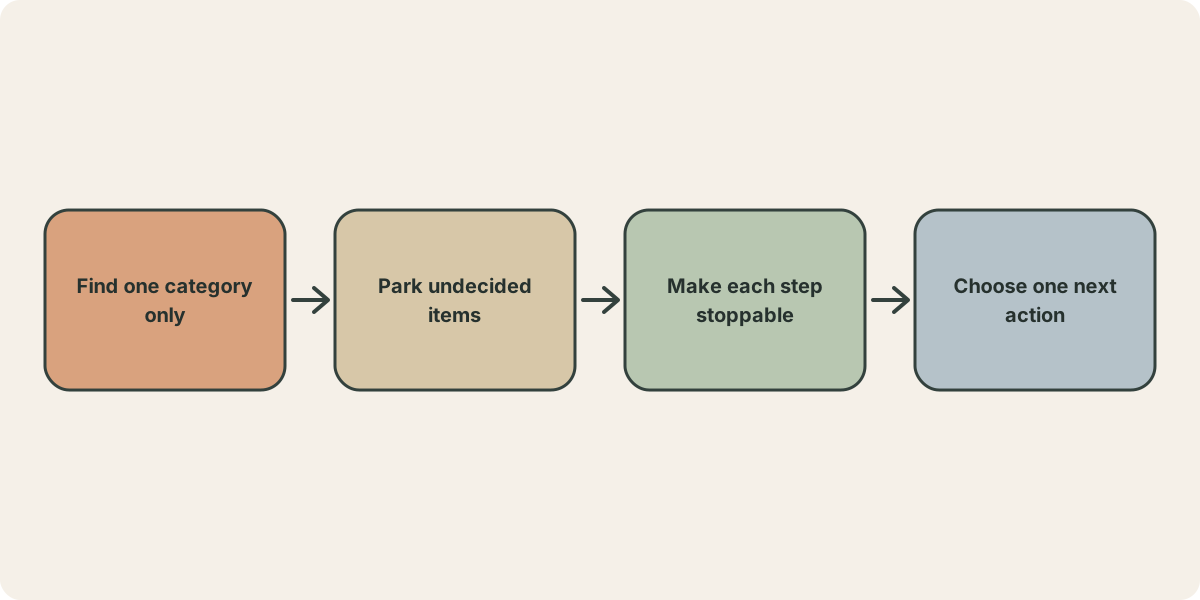
You can start by shrinking the goal until it is very small. Today, look only for trash: put packaging and broken items you see into a bag first, without also sorting recyclables. Next time, collect only dishes: take dishes scattered in different places to the sink, without requiring yourself to wash them yet. Clothes can go into the laundry basket first; remotes, books, or bags that already have a known place can each return to where they belong.
The point is not to build a perfect system, but to let your eyes search for only one target. When you only need to find dishes right now, other items that are hard to decide on can stay out of judgment for the moment. Once each step is smaller, organizing is no longer “solving the whole room,” but completing one visible action.
Leave a holding place for things you cannot decide on
What most often causes people to get stuck are the things they do not know whether to keep, and do not know where they should go. You do not have to force yourself to make a final decision immediately. Prepare a fixed holding box, gather these items in one place, and first restore the desk, bed, or walkway so it can be used again. When your energy is more stable and you have a more complete stretch of time, come back and review them one by one.
Holding is not hiding the problem. It needs a visible location, and an agreement to look again later, so it does not become a new pile. If family members live together, you can also make it clear first: who decides on the items in the holding box, and when you will look at them together, so well-meant organizing does not turn into mutual guessing.
Every action needs a place where you can stop
Low-load organizing works because each task has a clear endpoint: trash into the bag, dishes to the sink, clothes into the basket, items with a known place back where they belong. Finish any one of these and you can stop. You do not have to treat “not everything is put away yet” as failure.
This approach cannot handle an excess of belongings, and it cannot replace dealing with household safety. If walkways, doorways, or areas involving fire or electricity are already blocked, address access and risk first. If the volume of things has long exceeded what the household can manage, more people and more support may also be needed. Within the range where it is still possible to live safely, however, making fewer decisions first can help someone with little energy begin again.
Sustainable living does not require every day to be in perfect order. It means that when you are not in a good state, a path back to daily life is still there. Collecting just one bag of trash today, or making just one table usable again, is also a way of caring for yourself and the place you live.
Source: Liao Hsin-yun’s Facebook page (content compiled and adapted).