A package has sat on the table for days. One person finds it jarring every time they walk past; another says they truly didn’t notice. That sentence often makes the most exhausted person in the house even angrier, because they don’t just see the tabletop—they also keep the trash, the laundry, the shopping, and the food about to expire in mind at the same time. From where they stand, how could anyone not see it?
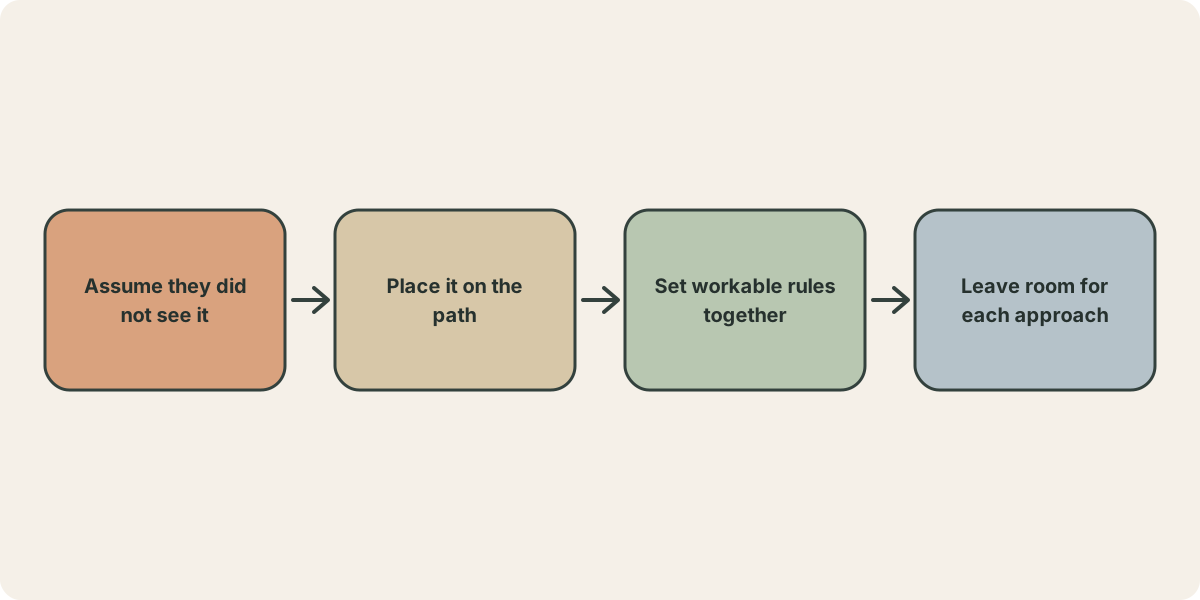
But translating “I didn’t see it” at once into “I don’t care” usually turns housework into a test of each other’s character. Believing first that the other person is describing their experience does not mean letting them off the hook. It only gives us a chance to move the focus from blame back to how we can make things harder to miss.
Household clutter is often remembered quietly by one person
Every family has a kind of invisible work: knowing how much toilet paper is left, which clothes still haven’t been put away, whose bottle needs washing, which day the trash has to go out. The person who carries these things is often also the first to notice when something is wrong. Over time, other people’s oversights start to feel like “I’m the only one looking after this home.”
So a pair of socks on the floor is no longer just socks, and a bag of trash is no longer just trash. They connect to a deeper sense of being wronged: Were my reminders heard? Does anyone care how hard I’ve been working? These feelings are real. But if every small thing is explained only as a matter of attitude, the conversation quickly reaches a deadlock between “You don’t care at all” and “I’m already trying so hard.”
Breaking housework back into concrete tasks is not a denial of those feelings. It gives them a path that can move forward.
Seeing and noticing were never quite the same
People tend to stop noticing objects that have not changed for a long time. A jacket left on a chair is conspicuous on the first day; a few days later, it may already have become background. Different people also move through the home differently: some walk toward their room as soon as they come in; others sit down on the sofa before taking off their coat. These differences may not explain every oversight, but they are enough to remind us not to treat every instance of not seeing as deliberate.
“Pay more attention” is hard to act on, because it does not say what to look at, when to do it, or what counts as done. If a task depends entirely on someone remembering, it is easily missed again and again. Rather than hoping the other person will suddenly become more perceptive, check together: Is this reminder placed where they will actually see it? Is this extra step so much that it is hard to keep up?
This is not about making housework cold. It is about admitting that everyone misses things, and that a household needs arrangements more reliable than reminders.
Let things wait where people actually pass
If a storage spot goes against how things are actually used, even the best rules are hard to keep. If coats always land beside the sofa, a hook or a basket can go nearby. If recyclables often stall at the dining table, perhaps you need a container that is easy to drop things into and easy to carry away. The point of the design is not to make the home look like a show house. It is to make the next action easier.
The same principle can apply to housework. Putting trash bags in the area that gets tidied most often, keeping cleaning supplies easy to reach, and reducing steps that require opening and closing cabinet doors again and again can all lower the chance that “I’ll do it later” ends up as forgetting. These small adjustments look ordinary, yet they affect whether things can continue to be used, sorted, and handled properly.
Sustainable living is not only about buying eco-friendly products. It also includes buying fewer duplicates, and making sure what you already have can be found and used for a long time. To do that, everyday processes have to be family-friendly first.
Rules should be decided together by the people who live there
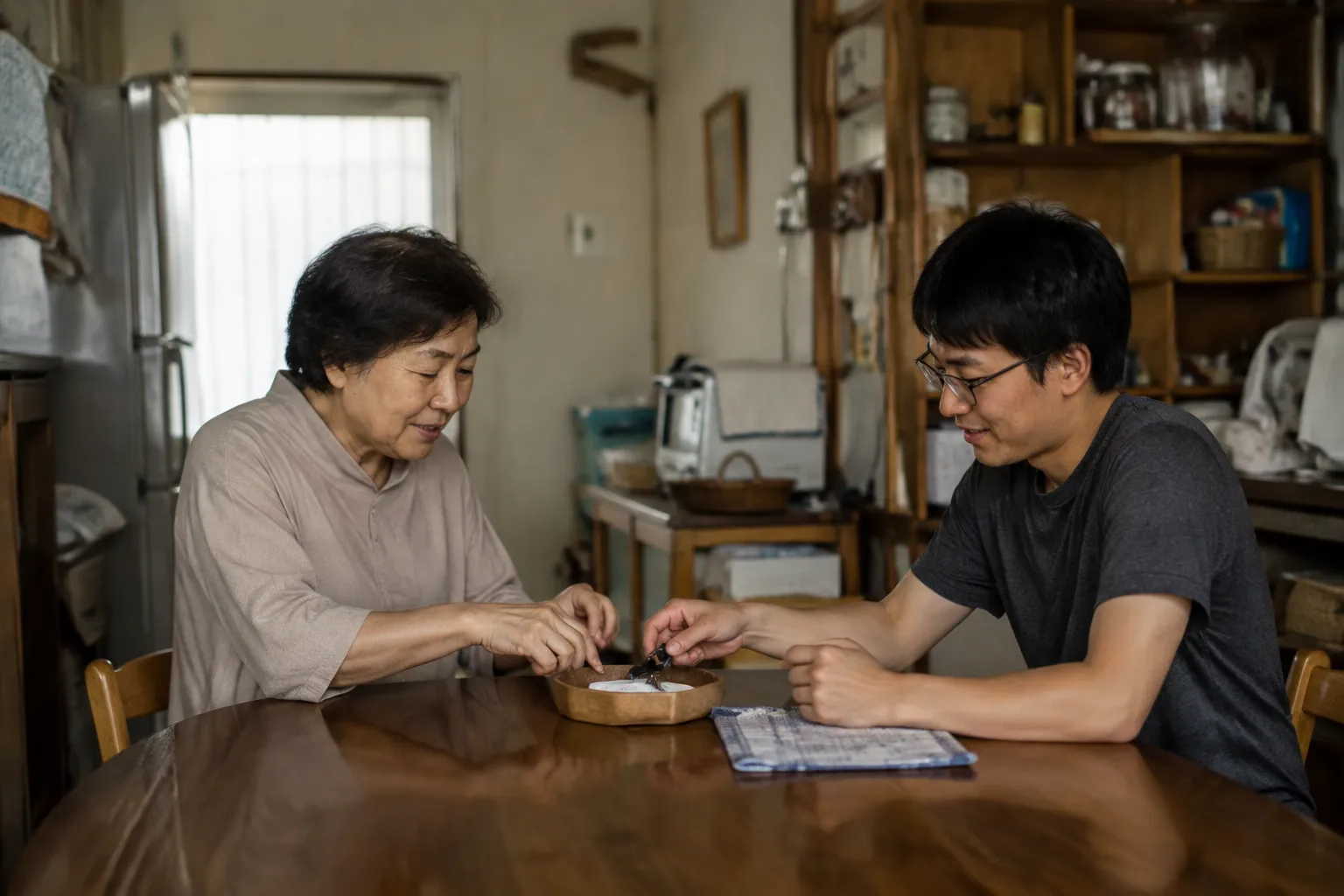
When one person sets all the rules, everyone else can easily hear them as orders. If you can talk it over together at a calm moment, it is easier to arrive at agreements people can actually keep. For example: where used items should go back, checking before buying another thing that does the same job, and which time each week you will walk through the shared areas together. The rules need not be many. Being remembered matters more than being written out in full.
Deciding together also means people can name what is difficult. Someone may say they truly have no energy left to deal with it after work. Someone else may find that the original location is not even on their way. These responses are not excuses; they are clues for adjusting the method. If the division of housework only demands that others comply, it is hard to last. If it allows revision, it can become a habit everyone is willing to keep.
When you hand something over, leave room for how they do it
Inviting family members to take part is not the same as standing nearby and supervising every item. The person washing dishes has their own sequence; a child tidying a room will sort things differently. As long as safety, hygiene, and shared agreements are not being broken, there is no need to correct every action into one single way of doing things.
When someone is corrected at every step, next time they may well rather not touch it. Conversely, a “thank you for taking care of this” makes taking part more sustainable. This is not lowering the standard. It is keeping the relationship in which people are still willing to do things together.
Next time you see that item in the wrong place, perhaps ask one fewer “How did you miss it again?” and ask instead, “Where would you be more likely to remember it?” Once the question shifts from who is right and who is wrong to how things are arranged, housework may no longer rest only in one person’s eyes.
Source: Liao Hsin-yun’s Facebook page (content compiled and adapted).