There is a kind of organizing difficulty whose focus is not “being unable to let go,” but things that keep coming in. One account retold in the source describes clothes piled through a room, a floor almost impassable, and bags still hanging with tags; even after some of it is cleared, belongings quickly pile back up. When buying and using have long since come apart, the volume of items before you may be a signal, but it is not necessarily the core of the problem.
It is easy to take this as a lack of restraint, then to urge the other person to buy less and tidy up quickly. But if the moment of buying brings one of the few remaining senses of being able to decide for oneself, taking that away or assigning blame may only strain the relationship further and make help harder to approach. This does not mean that all buying comes from the same kind of difficulty, still less that anyone can be labeled; it reminds us that, before talking about belongings, we first look at the person and the environment together.
When Buying Offers a Brief Sense of Control
When the body, relationships, or life circumstances undergo a major change, the things a person can decide for themselves may grow fewer. Buying is a very short sequence of action: choose, pay, receive. It does not require waiting for someone else’s consent, and a result arrives quickly. If a person temporarily cannot control much else, this process may bring a brief sense of steadiness.
Seen from this angle, there is no need to rush to explain as “irrational” why someone keeps buying items of ordinary quality, things already owned at home, even when there is no space. The item’s function of use may recede into the background; the action itself is the point. This, however, is only one possible way of understanding; motive cannot be read backward from the quantity of belongings. Similar outcomes may also come from busyness, household division of labor, gift-giving, a long stretch without taking stock, or other reasons.
Unopened Boxes Can Tell Us Only Part of the Story
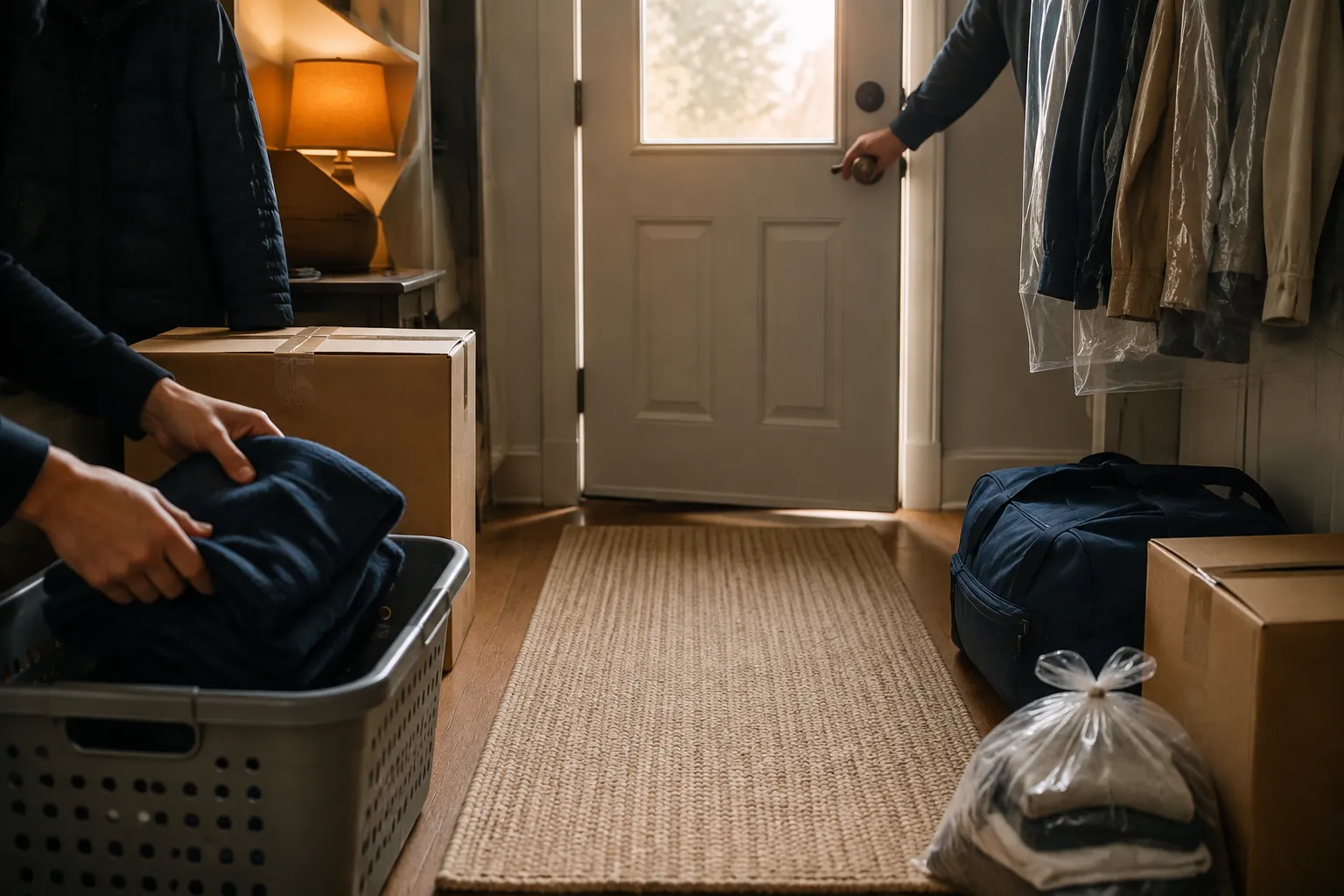
In organizing records, one household had unopened boxes stacked for a long time in the entryway and living room. The homeowner said there was no time to organize them, and nowhere to put them; many of the skincare products inside had already expired two or three years earlier, and unopened fragrances had also oxidized. The household itself described buying as having been consolation and a reward given to oneself.
This case can show us what belongings may face after buying and using have come apart, but it cannot prove that every unopened box is some form of psychological compensation. Translating the picture of the scene directly into a diagnosis is both inaccurate and likely to make the person even less willing to talk. Rather than pressing “why did you buy so much,” it may be better to observe first: which things have never been used? When did buying frequency begin to increase? What was changing in life during that period?
These questions are not for interrogation. They help family members judge whether what is needed now is organizing, companionship, medical care, psychological or social support—or several kinds of help coming in at once.
First Address the Environment That Can Harm, Rather Than Taking Away the Power to Decide
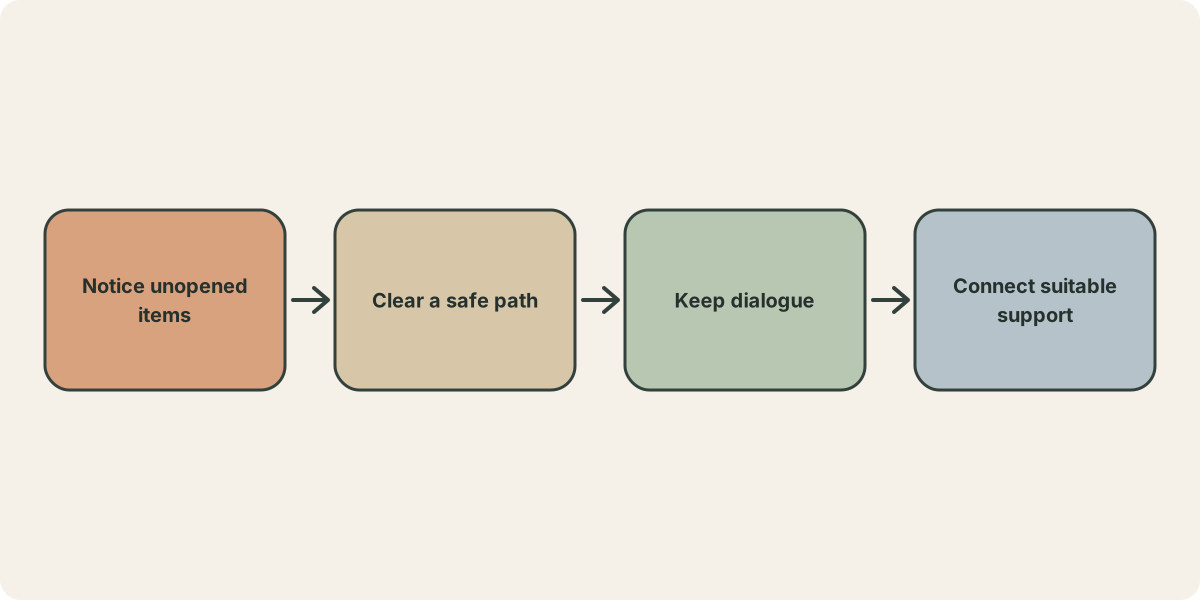
When passages are blocked, doors cannot open, the bed cannot be used, or combustibles are piled around the stove, environmental safety needs to be handled first. Organizing can start here: open the walkways, remove obvious hazards, and make it possible for people to come and go and rest as usual. This work does not necessarily require first clarifying the meaning of every item, nor waiting until the person has fully changed their mind.
But clearing large quantities of belongings without consent often undermines later cooperation. If those items carry the last bit of what the person can still have a grasp on, having someone else take them all at once may once again deepen the feeling that “what I say does not count.” When family members face the chaos, they want life restored quickly, and that urgency is also real; yet if restoring order comes at the cost of losing the relationship, the inflow side may become even harder to see.
A more workable starting point is to narrow the scope to areas of safety and shared consent—for example, first keeping the walkways, the stove, and the sleeping space, then talking about other places. Each small, foreseeable decision may build cooperation more than a single thorough emptying.
Organizing Is Not Treatment, and Should Not Be Asked to Replace a Support System
Organizing work can help with sorting, clearing safe space, and finding suitable destinations for items that can still be used. It cannot, however, address every reason for ongoing buying. If buying is responding to a strong sense of loss of control, what needs support is that sense of loss of control itself; medical, psychological, and social support each have their professional place, and organizing can only be one possible entry point.
Calling organizing a universal solution easily delays appropriate help. Conversely, waiting until every difficulty has been resolved before being willing to improve the environment also leaves a household in danger for too long. The value of public support is that different professions do not replace one another: someone helps with safety, someone holds the relationship, someone stays with the person to understand the life difficulty, and someone helps recognize when a more suitable service should be sought.
What Family Can Do Is Leave an Opening Where Talking Is Still Possible
Facing belongings that keep flowing in, family members often feel powerless. Rather than rushing to argue whether each item is worth keeping, one can leave a few openings for cooperation: caring whether the other person has been resting lately, whether they are having a hard time; agreeing on safety boundaries for shared areas; and, when the other person is willing, opening one box together or organizing one corner. These actions look small, yet they do not push the person onto the opposite side.
Belongings will still eventually need to face circulation, recycling, or disposal, but in this kind of situation, speed is not the only measure. What matters more is whether the family can, without denying the person, lower the danger, keep the relationship going, and give appropriate support a chance to come in.
The next time you see a large quantity of unopened items, perhaps the first question need not be “why did you buy again,” but: what has this person lately been trying to get through?
Source: Liao Hsin-yun’s Facebook page (content compiled and adapted)