In a child’s room there are often things that look easy for adults to deal with: markers that no longer write, clothes that no longer fit, duplicate stickers, or toys whose last playtime no one can remember. Wanting space more quickly, adults decide for the child what should stay and what should go. Yet if tidying only chases the neatness of the moment, what the child may lose is a chance to understand their own life.
Things break, go out of date, and pass into other people’s hands; the ability to tell whether one still needs something, however, grows up with the child. That ability does not appear suddenly in some big clean-out. It forms slowly, through being asked in earnest, again and again, and being allowed to think.
When others decide in their place, keeping everything becomes self-protection
Some parents have cleared things away while the child was out, hoping to avoid a struggle. Cases from the source remind us that, once the child finds out, they may hold on even tighter. For them, what has changed is not only that a toy is gone, but that “Will my things disappear without my knowing?” has become uncertain.
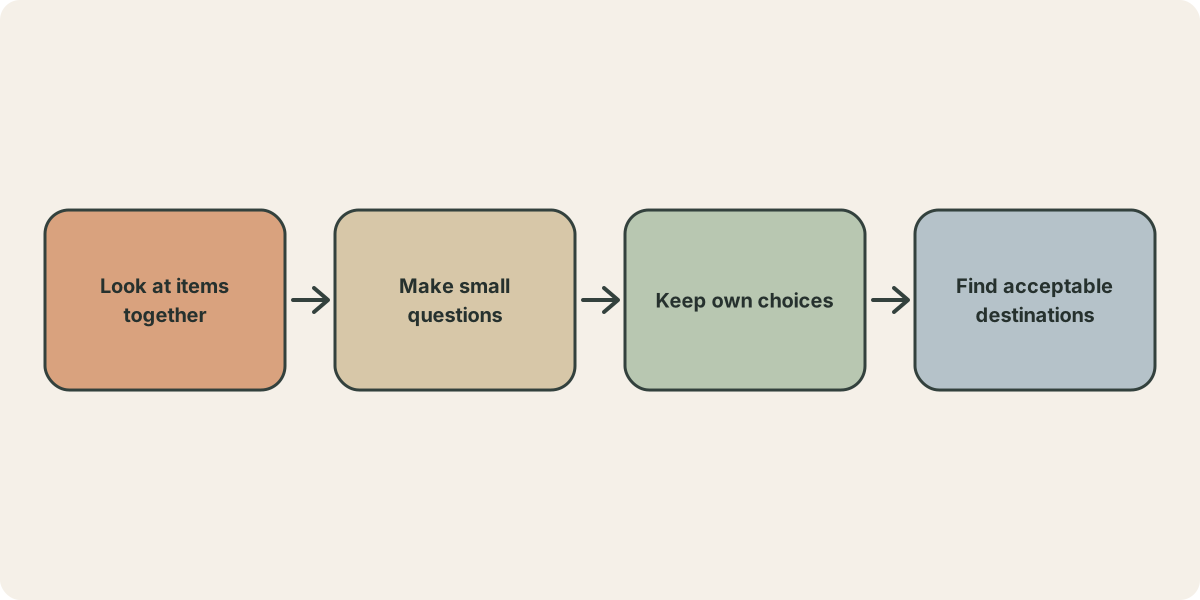
When that uncertainty rises, keeping every last item becomes the safer course. This is not the child being contrary on purpose; they are protecting the small range they can still control. Rather than reading this reaction as immaturity, it is better to state the rules clearly first: we will look together at what belongs to you; you have the right to say why it matters to you; and if something is to leave, you will also know where it is going.
These rules do not mean adults give up boundaries. Shared spaces, dangerous items, or quantities that clearly exceed what the household can carry still need limits set by caregivers. The difference is that those boundaries need not be enforced by taking things in secret or by intimidation.
Looking together means breaking choice into questions a child can answer
A young child may not be able to answer a large question such as “Do you want to tidy up?” but they can usually respond to more specific ones. For example: Can these markers still draw? Have you used this puzzle recently? If you keep only two, which two would you choose? The closer the questions are to daily life, the easier it is for a child to move from a vague reluctance to let go toward a judgment they can compare.
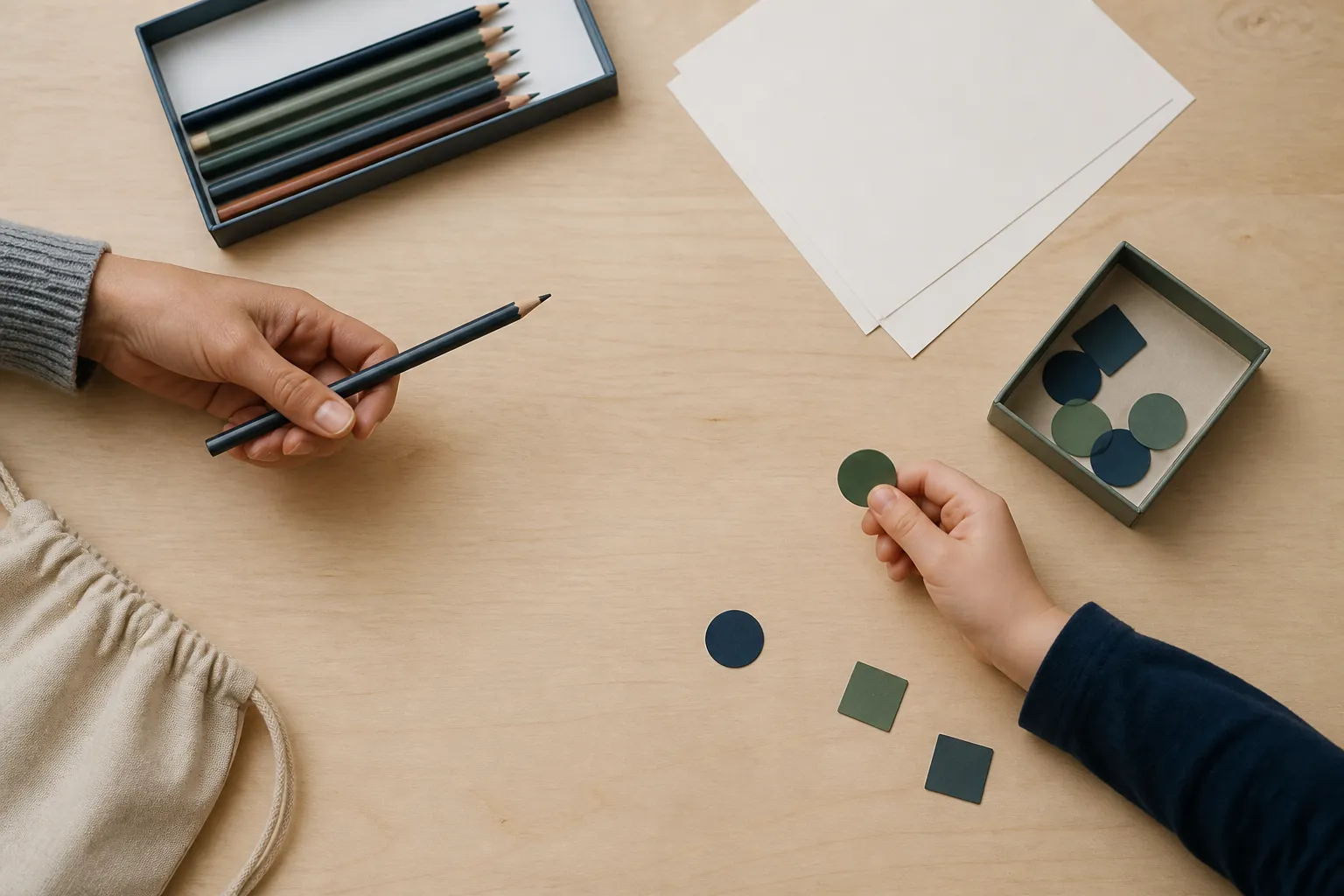
The point of sitting with them is not to steer them toward the answer adults expect, but to leave time for the choice. You can start with one small box or one drawer, let the child pick up each item, recall how it was used, and say why they want to keep it. What adults should do is help put similar items together and shrink the options to a number that can be handled—not step in with a conclusion while the child is still hesitating.
What the child is practicing is not only keeping or discarding. They gradually learn that what they keep needs a usable place; that things they truly like need not be drowned among items of the same kind; and that choosing less actually makes it easier to find and use things again.
When things have somewhere to go, letting go is more than a loss
What many children resist may not be the item leaving, but being unable to imagine what happens after it leaves. If adults only say “These have to be thrown away,” the item seems to be pushed toward an ending with no picture. If you can explain honestly—that drawing tools still usable will be given to people who need them, that clothes will be sent through an appropriate organizing channel, that damaged items will be handled separately—the child is more able to understand that this is not arbitrary dumping.
This explanation need not dress every item up as something grand. What matters is letting the child see that after an item’s task in their own home has ended, it may still have a different next step. Items that can still be used being passed on appropriately, and items that cannot be used being properly sorted, are both ways of understanding, in daily life, that resources are limited.
The entrance is mostly decided by adults
The quantity of a child’s things is often not created by the child alone. Purchases, gifts from relatives and friends, supplies picked up and brought home, and holiday presents are mostly opened at the entrance by adults. If the entrance keeps expanding, yet the child is only asked to learn to let go, the responsibility is not equal.
A more sustainable approach is for the family to discuss first which items are truly needed, how many of the same kind of supplies can be kept, and where gifts should go once they arrive. Children can also take part in these discussions, and understand that every new item that comes in will occupy space, time, and the energy of caring for it. This is not asking the child to bear an adult’s consumption choices; it is letting them see, from early on, the relationship between things and living.
Turn tidying into a practice of being trusted
Parent-child tidying need not aim to finish in one go, and a child’s hesitation need not be treated as failure. Sorting a few used-up pens this week, then a small stack of drawing paper next week, is still accumulation. What is truly worth keeping is the child’s growing sense that someone hears their thoughts, and that they too can make decisions about their own life.
When a child learns to choose while being respected, they are more likely, later on, to have a measure of their own when they face buying, using, and passing things on. This does not guarantee that everyone will become spare in their ways at once; it does, however, let sustainable living be not only a rule adults hand down, but a daily practice the child can understand and take part in.
Source: Liao Hsin-yun’s Facebook page (content compiled and adapted).