We often treat organizing as a matter of method: sort first, then store, and deal with a few items each day. These methods are useful, but they rest on a premise: the person doing the work has to feel they have a place in this space, and that they might be treated well. If someone has long felt watched, rushed, or worried that their belongings will be handled at will, even the best methods may come across as just another form of pressure.
Home is the most ordinary place, and also where people most readily feel whether they are accepted. Things sometimes pile up and grow messy. Behind that is not necessarily habit or ability alone; it may also be bound up with how a person holds on to a sense of safety, and whether they can still make choices for themselves.
When organizing is understood as a threat, defense comes first
In a case from the source, someone was required from childhood to tidy up, or their things might be thrown away. She became especially afraid that cards and gifts from friends would vanish, and repeatedly asked her family not to touch her room. Later the room filled with more and more things, and there was less and less space to rest. This is not to say that all accumulation comes from the same cause. It is to help us see that when dealing with belongings feels like a threat, people naturally keep close what they can still protect.
The same holds for older people. If someone’s sphere of daily life is already small, and others then demand immediate change because “it’s too messy here,” what they may be touching is not the ability to organize, but dignity. Crowded belongings can indeed affect movement and safety, and these problems need to be addressed. But understanding what the person is losing, before addressing them, often does more to open a conversation than a string of instructions.
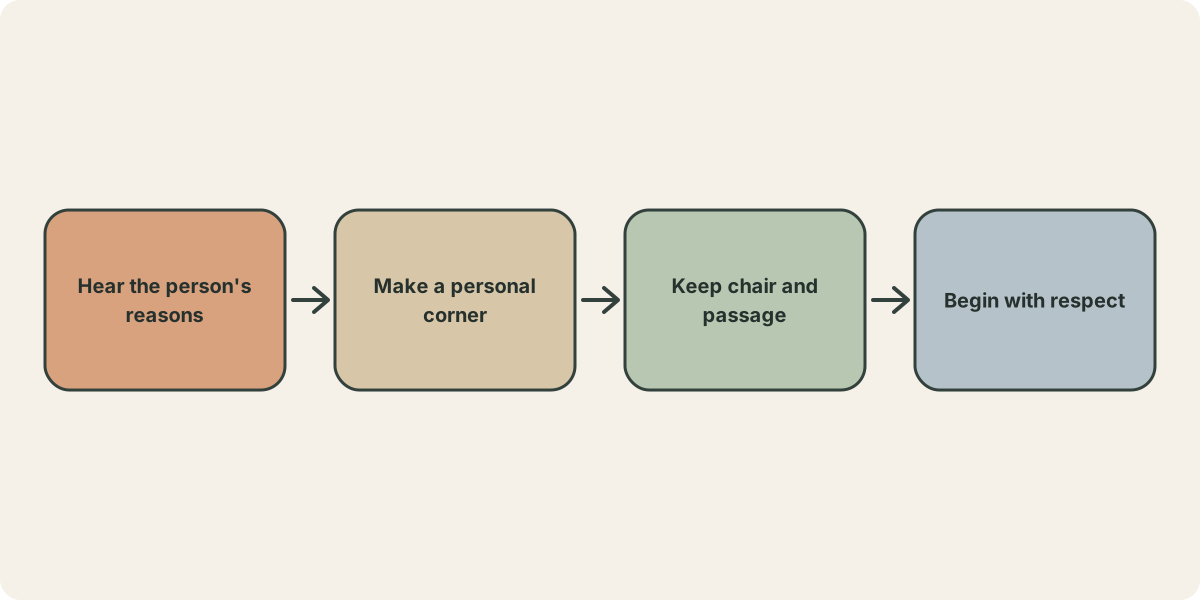
A corner of one’s own is a condition for life to have a place
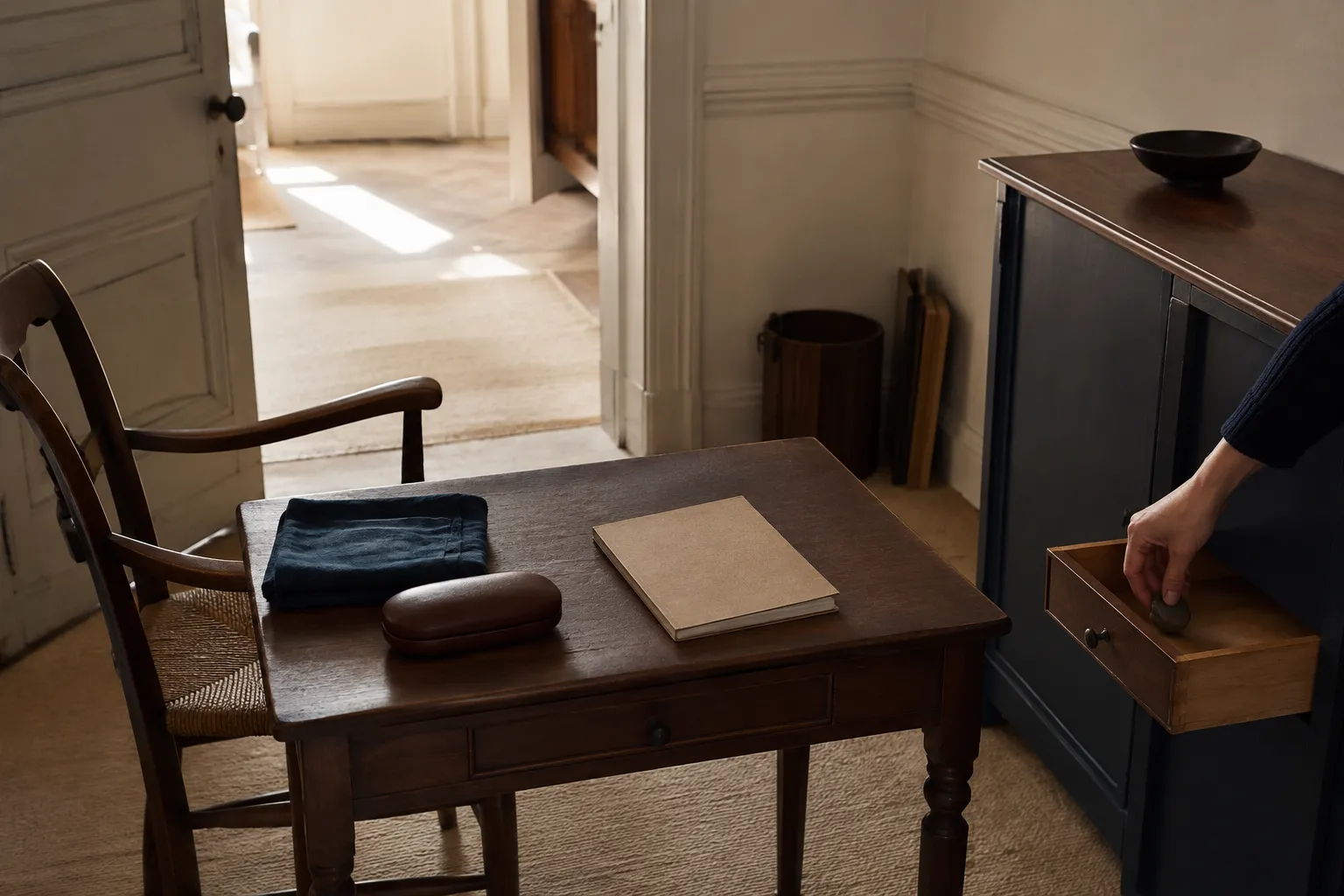
Everyone needs a range they do not have to justify at every turn: a place to sit, to rest, and to put personal things, and to take part in change after being asked. This does not mean a person may ignore shared space or other people’s safety. It means household rules cannot be reduced to who has more right to speak.
Start by confirming small, concrete things. Which items matter most to the person? Which drawer, cabinet, or corner do they want to decide for themselves? How should shared spaces keep a clear path? When these questions are asked with care, organizing is no longer just moving someone else’s things aside. It is finding, together, a place each person can use with peace of mind.
In a living space, leaving room is not a luxury. Being able to walk to the bedside, open a door, and find what you need are basic conditions for keeping daily life going. For these conditions to last, they cannot come at the cost of shutting someone out of the process.
Respect is not permissiveness; it is hearing the person’s reasons first
Respect is often mistaken for not being allowed to make a request. In fact, respect is placing the request inside a relationship that can answer it. For example, instead of saying, “These have to be cleared out today,” you can first explain that the walkway needs to stay safe, then ask which items must not be touched and which can be looked at together. Instead of deciding for the other person what has no value, ask them which things they use often, which are mementos, and which they themselves do not know how to handle.
This way of talking will not make every view agree at once, but it can lessen the feeling of being left out. When the person knows they still have a chance to explain and to choose, they are more able to accept that decisions will be made in several steps. Trust in the relationship often decides, earlier than any organizing process, whether change will stay.
Sustainable living must also care for people’s conditions
Reducing waste, extending the life of things, and letting still-usable resources flow again all require people to be willing to take part. But not everyone has the same space, time, and power to decide. For a child who constantly worries that their room will be emptied, talking about passing things on may feel like asking them to give up protection. For an older person with no fixed place in the home, talking about simplifying life may feel like another reminder that they are not needed.
So a discussion of sustainable living, besides telling people how to do it, should also ask: Do they have the conditions to do it now? Can they decide part of their own life? After they make a change, will they receive support rather than inspection? These questions have no standard answers, yet they can keep us from placing all the responsibility on the person with the fewest choices.
It starts with words that make a person feel seen
Change sometimes begins with a very small confirmation: Is this a place you want to use well? What do these things mean to you? Which small part can we handle together first? These questions will not remove every difficulty, but they give organizing a chance to turn from forced compliance into an arrangement for living together.
Being respected does not guarantee that someone will immediately become good at organizing. The layout of the space, the number of things, and a person’s health may still call for different kinds of support. But when a person knows they are not the problem itself, but a family member who can work out solutions together, methods have a place to land. Giving everyone in the home a place that can be seen and talked over is also part of keeping life going for the long term.
Source: Liao Hsin-yun’s Facebook page (content compiled and adapted).