When organizing belongings left after a death, the hardest question is often not “Should we keep this?” but “If we do not keep it, will I still remember this person?” Clothes, photographs, handwritten notes, and everyday objects make a person’s life concrete; they can also leave a family unable to walk out of the original room. Clearing everything out can feel like saying goodbye too soon; leaving everything untouched can leave both the home and the pressure of care stuck in place.
This is not an exam that demands a calm choice. People who have lost a family member already need time. Memory, however, does not have to be kept only through a house full of physical objects. When we organize what we want to keep into forms that are easier to share and more likely to last, belongings left after a death can slowly turn from a burden into a doorway through which a family comes to know a person together.
What one object carries is often more than the object itself
An ordinary cup means something different once you know it was always used at breakfast. A stack of yellowed tickets is more than paper if someone remembers they were left from the first time a group of relatives traveled together. Belongings left after a death are hard to handle not because of the materials themselves, but because they hold, in silence, a stretch of everyday life, a kind of relationship, even how a person once lived.
A family therefore need not rush to judge every item by whether it is “useful.” Some objects can still be used; some are suitable to pass on; some are already too fragile to keep for long. Others, because of their stories, deserve to be carefully written down. First distinguish whether what an object carries is function, remembrance, or an emotion not yet spoken. Only then will what follows not be reduced to clearing things away.
Preservation is not keeping everything
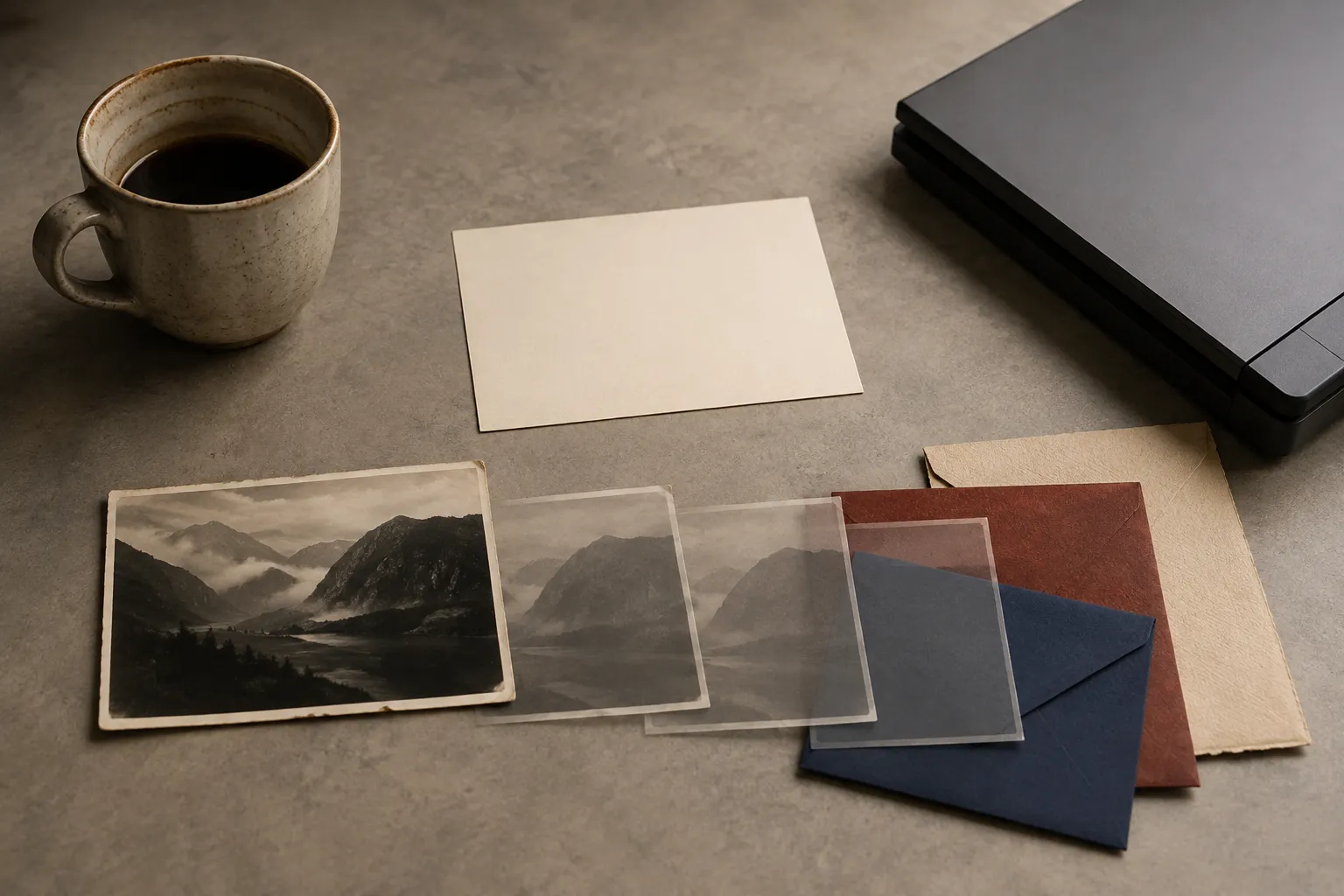
Physical objects have their limits. There may be only one of an item, and when siblings all want to keep it, an awkward situation is hard to avoid. Objects also grow damp, fade, and break; they may even fall apart the moment they are picked up. Space in a home is limited, and long-term preservation also takes people and care. Acknowledging these limits does not mean forgetting. It means the way we preserve need not depend only on occupying space.
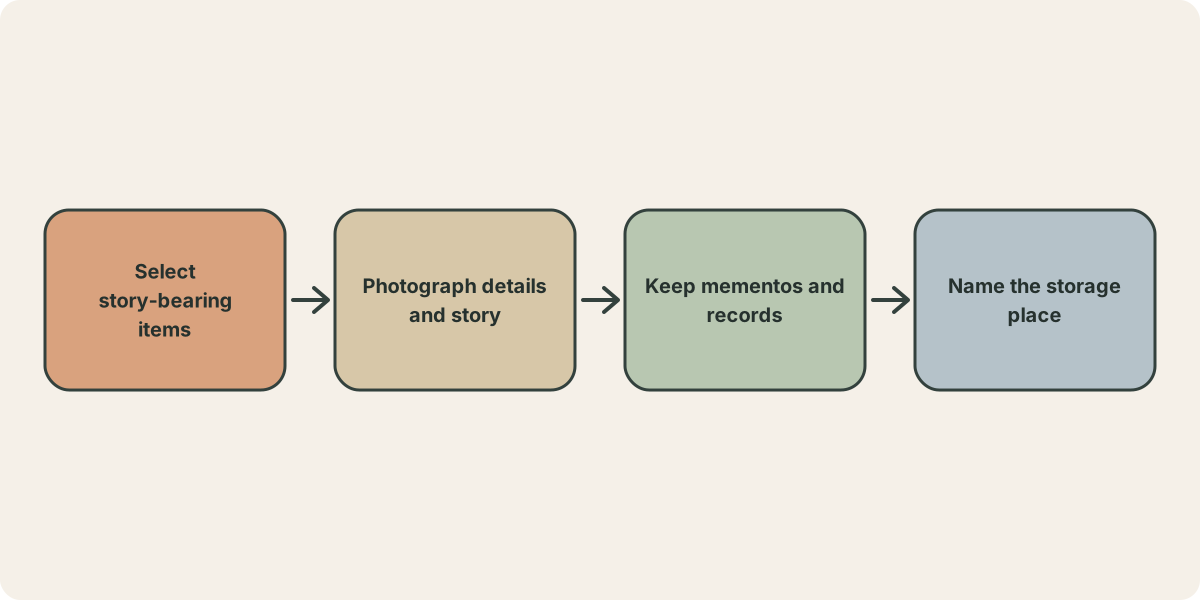
Start by selecting a few objects that most represent that person: a frequently worn piece of clothing, a book filled with notes, a photograph with a clear story. The principle of selection need not pursue fairness so strictly that every item is treated the same. It is that the family can say: Why this one? What does it help us remember? When a choice has language, keeping a small number of objects no longer feels like a rejection of the rest.
Let images keep the look of the home and the details of objects
Photographing or filming before organizing is a gentle form of preservation. You can photograph the room as it originally was, the things usually kept on the desk, the familiar arrangement in the wardrobe, and the details of particular objects. These images need not be perfect, and there is no need to catalog every item. The point is to leave a place to look back, for questions that may arise later.
The advantage of images is that they can be copied and shared. Different family members need not compete to keep the same object, and can still each have a record. For younger relatives who never lived in that home and never met that person, the pictures may also give shape to an abstract name. Preservation shifts from “who took what” to “what we want to pass on.”
Stories need to be told while someone still remembers
What is easier to lose than photographs is the explanation behind an object. Who gave it, in which year it was bought, why it was too precious to use, which move it was almost lost in—if no one tells these things, they become hard to recover after a few years. While organizing, family members can be invited to take turns telling a story, recording the words or writing them beside a photograph. The content need not be solemn or complete; a sentence or two of everyday memory is enough.
This also means that organizing belongings left after a death need not be borne by one person alone. Someone takes the photographs, someone identifies the people, someone fills in the stories, someone helps decide which objects can be given to those who need them. Each person takes part in a different way, but all can leave a place for themselves in the process. If opinions differ, the disagreement can be recorded and set aside for now, rather than forcing a conclusion when emotions are heaviest.
Digital preservation also needs someone to look after it
Taking a photograph is not the same as finishing the work of preservation. If files have no names, no dates, and no one knows where they are kept, they will still be impossible to find later. A family can agree on a simple arrangement: keep everything in one place everyone knows, name folders by person or by year, keep at least one backup of important files, and say who will help manage them. These arrangements need not be complicated, yet they can make the records actually findable.
At the same time, avoid photographing everything onto a hard drive. Digital space may seem unlimited, yet it can postpone the original organizing into another kind of accumulation. Select first, then record; explain first, then preserve. When a family is willing to make room for a few truly important objects and stories, belongings left after a death need not fill a room to prove they matter.
Source: Liao Hsin-yun’s Facebook page (content compiled and adapted).