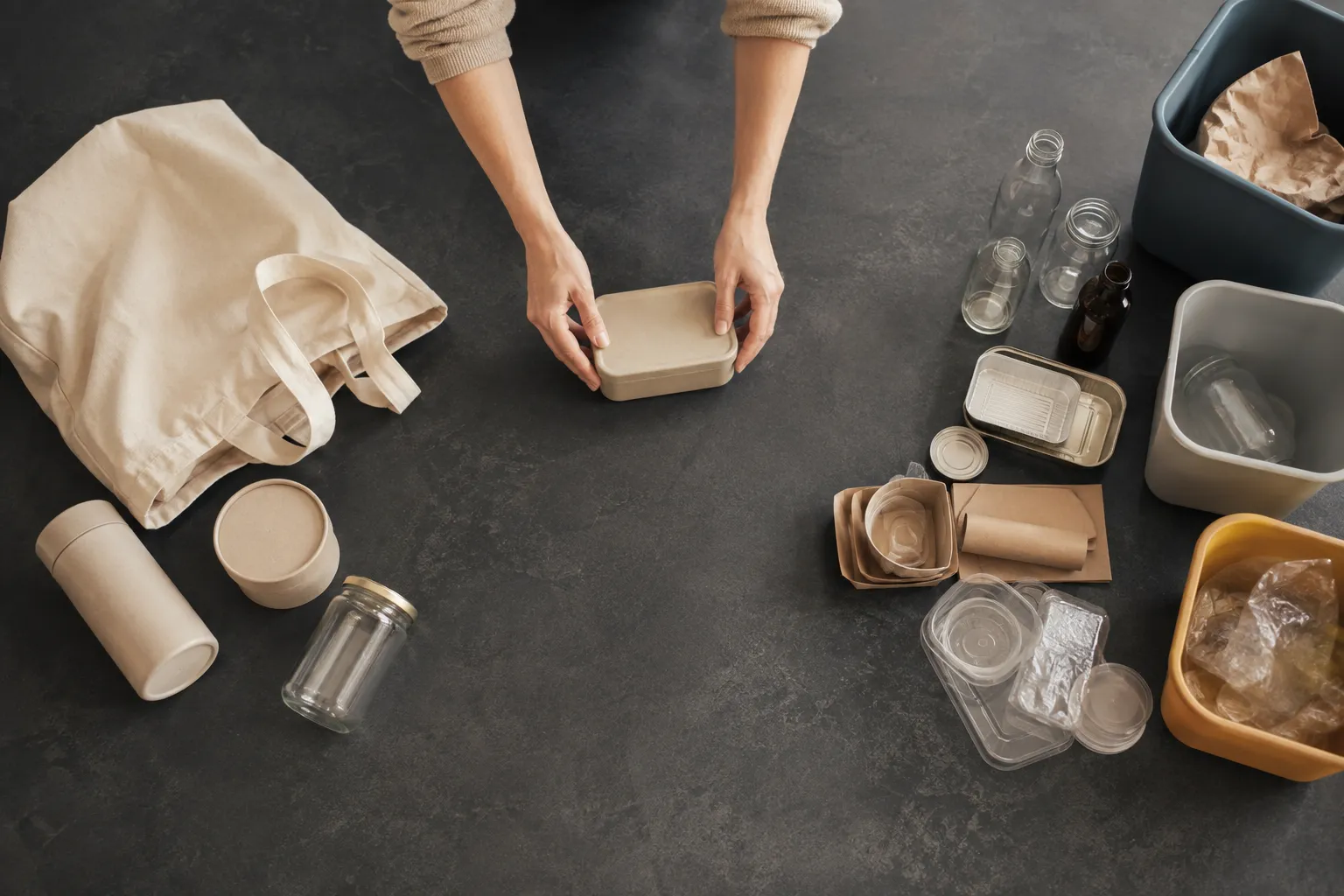
Washing bottles and cans, sorting them, and sending them into the recycling system is a daily action many people are willing to take. That effort deserves to be seen, because items that have already left our living spaces still need someone to receive them, sort them into streams, and process them. Yet when we place all our expectations on the recycling end, we can easily overlook something that happens earlier: the goods and packaging that enter a household begin to accumulate at the moment of purchase and design.
Recycling is not ineffective; it has a range of what it can handle. It deals with consumption that has already taken place, giving some materials a chance to return to a further stage of use. Reduction, by contrast, happens before items come through the door, so that less pressure is created for later collection, sorting, and processing. Both need to be done together, but neither can replace the other.
Downstream facilities take on choices that have already been made
Before an item is dropped into a recycling bin, it has already been manufactured, packaged, shipped, purchased, and used. Recycling equipment, collection workers, and processing sites are responsible for the second half of that path. They can improve sorting quality, make materials easier to identify, and accumulate the data needed to understand how goods flow. For bottles, cans, paper, and other recyclables that have already been generated, this foundational work is indispensable.
But how much the downstream end can process is still limited by collection coverage, sorting conditions, material quality, and processing capacity. Whether different materials can be recycled, and what they can become afterward, is not decided by the person who puts them out alone. Placing all responsibility on whether individuals “sorted things correctly” makes it easy to overlook design further upstream in the system, and it also makes the difficulties of frontline processing work invisible.
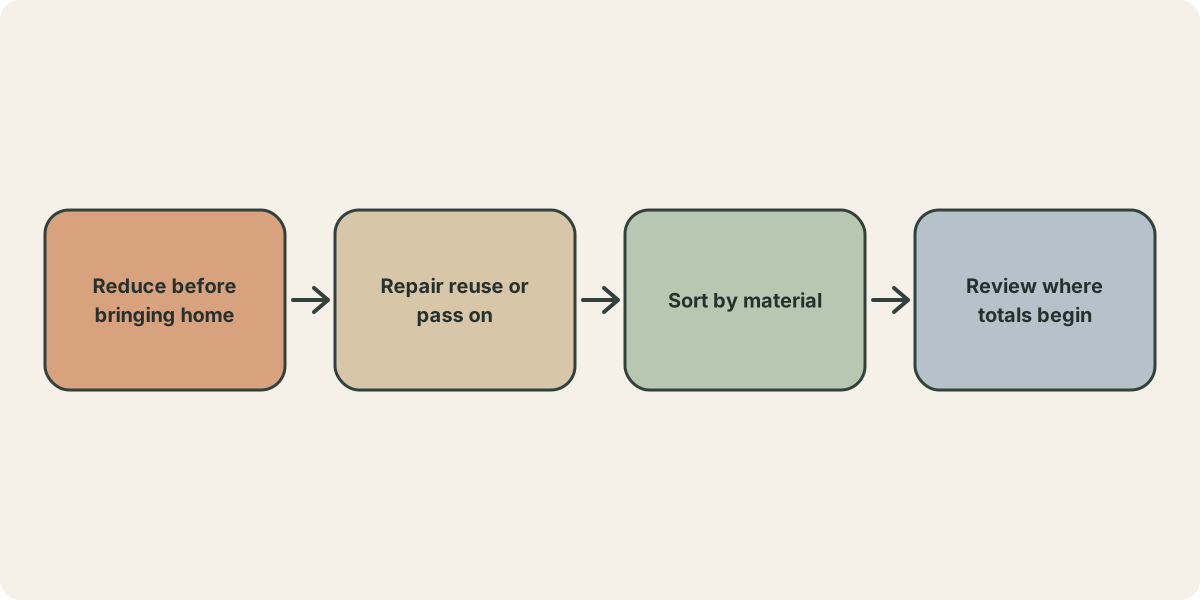
Reduction begins before we bring things home
When people organize their homes, they often find that many items waiting to be dealt with did not leave because they were broken. They were bought but never used up, bought again, received as too many complimentary gifts, or left unused because the packaging or the way they were meant to be used did not fit. Recycling can process some of those materials, but it cannot go back to the moment when someone could have asked whether the item was needed.
This is not about moralizing consumption choices. Everyone’s time, budget, living conditions, and available options differ. A more workable approach is to pause a little longer in a few common situations: Does the household already have something similar? Does this packaging actually match how it will be used? Is there a way to choose less single-use packaging? If the answer is not easy to judge, not rushing to buy is also a way of looking after household resources.
Recycling difficulty begins to take shape when an item is designed
How easy recycling is does not depend only on whether people sort well. Composite materials, parts that are hard to separate, excessive packaging, and labels without clear instructions all increase the burden of later processing. Conversely, if a product is designed from the start with durability, repairability, reusability, and materials that are easier to separate in mind, users and processors have a better chance of completing the parts each of them can do.
This reminds us that sustainable living should not be only a to-do list handed to households. Producers, designers, sellers, users, and processors all stand on the same path along which goods flow. Whoever can change a given stretch should take corresponding responsibility for that stretch. Putting the problem back onto the full path is closer to the start of improvement than blaming any single party.
Let reuse come before recycling
For items that are still in good condition and that someone will need, considering continued use, repair, or passing them on often extends their life more than sending them straight into recycling. That does not mean every item should be given away. Before passing something on, it is still necessary to confirm safety, hygiene, function, and whether the other person truly needs it. Items that can no longer be reused should then be handled through the appropriate channels.
Households can set up a simple order of judgment: first use it up or repair it, then see whether family or friends need it, and only then consider donation, passing it on, or recycling. The order is not a rule; it helps us keep items that can still be used from being pushed too early toward the downstream end. When an item is taken up by the next person at the right time, the volume that originally needed to be processed may also decrease.
Beyond recycling, we also need to ask where the total volume comes from
Recycling is worth continuing, because it is part of how a society jointly maintains the environment. But the longer-term questions are these: Do we keep bringing too many hard-to-process items into our lives? Do households have enough information to make suitable choices? Does the design of products and packaging leave users and the back end with no choice but to absorb the consequences? These questions do not have answers that a single round of sorting can provide.
Sustainable living does not require everyone to produce no waste at all. It means bringing a little more understanding of consequences into each choice. Buying one fewer unneeded item, extending the life of something that can still be used, and correctly sending out what should be recycled are efforts from different positions. When reduction, reuse, and recycling are all brought into daily life, the hard work at the downstream end no longer has to be the only line of defense.
Source: Liao Hsin-yun’s Facebook page (content compiled and adapted)